

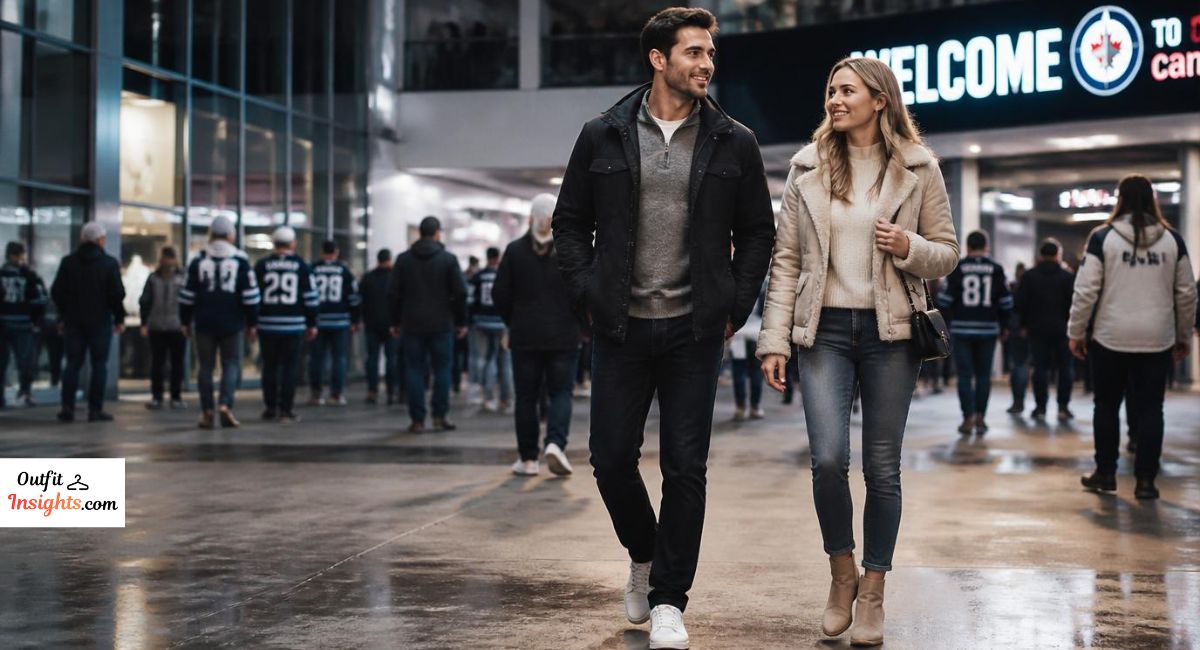
Going to a hockey game for the first time or the fiftieth time raises the same question every single time: what to wear to a hockey game that looks good, keeps you warm, and actually fits the venue. Hockey arenas are notoriously cold. The ice keeps ambient temperatures low, ventilation systems push cold air constantly, and games last over two hours. Getting your outfit wrong means spending the entire game shivering and distracted instead of watching the action.
This complete guide covers everything you need to know about what to wear to a hockey game — from layering systems and footwear to outfit ideas for women and men, what to wear to an outdoor hockey game, how to wear your team’s gear without looking like you just grabbed a jersey and gave up, and every common mistake first-timers make.
Whether you are heading to an NHL arena, a minor league rink, or a local college game, the outfit principles here apply across all of them. Since hockey arenas are typically kept much cooler than most indoor venues, layering appropriately is especially important. According to Hockey Answered’s guide to hockey arena temperatures, most NHL arenas are maintained at approximately 60–65°F (15–18°C), making light layers and comfortable outerwear a smart choice for nearly every game.
1. Why Dressing for a Hockey Game Is Different From Other Sports
What to wear to a hockey game is a genuinely different question than what to wear to a baseball game, a football game, or a basketball game. The critical difference is temperature.
Indoor hockey arenas maintain a consistent temperature between 55 and 65 degrees Fahrenheit near the ice, with ice-level seats feeling significantly colder than seats higher up in the stands. Some arenas run even colder. Unlike a football stadium where outdoor weather determines how you dress, an indoor hockey arena creates its own cold environment regardless of what the weather is doing outside.
This means that even in summer, knowing what to wear to a hockey game requires a different mindset than dressing for outdoor summer activities. You are walking into a cold environment from warm weather, which also means your body needs time to adjust and your layers need to be easy to manage on and off.
The second factor that makes hockey game outfits distinct is the standing and movement involved. Hockey fans stand frequently, cheer actively, and move around during intermissions. Your outfit needs to be comfortable enough for active movement, not just sitting still for three hours.
2. The Core Layering System for Hockey Games
The foundation of knowing what to wear to a hockey game is understanding the three-layer system that works for any cold indoor environment.
Base Layer
Your base layer sits directly against your skin and its job is to manage moisture and retain warmth. A fitted long-sleeve thermal or moisture-wicking long-sleeve top is the standard base layer for a hockey arena. Cotton long-sleeves work but they absorb moisture and can feel cold and clammy if you are moving around a lot. A merino wool or synthetic moisture-wicking base layer performs better for active use.
For your lower half, fitted thermal leggings or a thin base layer underneath your jeans or pants adds significant warmth without adding visible bulk.
Mid Layer
Your mid layer provides the main insulation. This is where your team jersey fits naturally if you are wearing one. A hoodie, crew neck sweatshirt, thick flannel shirt, or fleece pullover all work well as mid layers for a hockey game. This layer should be comfortable, easy to move in, and substantial enough to trap body heat.
Outer Layer
Your outer layer is for when you first arrive and when you leave the arena, and it also provides a final layer of warmth if your seats are particularly cold. A light to medium-weight jacket, a stadium blanket you can drape over your lap, or a vest over your hoodie all serve as effective outer layers for arena seating.
3. What to Wear to a Hockey Game: Outfit Ideas for Women
Knowing what to wear to a hockey game as a woman means balancing warmth, comfort, and looking put-together in an environment that rewards layering.
The Classic Fan Look
Team jersey over a fitted long-sleeve thermal or ribbed turtleneck, with high-waisted straight-leg jeans, and ankle boots or clean sneakers. This is the most common and most consistently successful women’s hockey game outfit. The thermal or turtleneck underneath the jersey solves the arena cold problem immediately while keeping the fan identity front and center. Slim or straight-leg jeans prevent the look from becoming too bulky when combined with the jersey. Ankle boots add a slightly elevated touch that elevates the overall look beyond pure fan gear.
The Warm and Stylish Look
Oversized hoodie or crewneck sweatshirt in your team’s colors or a neutral, with wide-leg or straight-leg jeans, a puffer vest over the top, and clean white sneakers or chunky boots. This outfit skips the jersey but still nods to the team through color choice while looking more deliberately styled. The puffer vest adds warmth at the core without restricting arm movement or making the overall silhouette feel too heavy.
The Elevated Fan Look
Fitted turtleneck in a team color or neutral, with tailored straight-leg jeans or trousers, a team cap or beanie, and clean leather sneakers or ankle boots. A statement coat or oversized blazer over the top pulled over when moving through the arena. This is the what to wear to a hockey game option for people who want to look genuinely put-together rather than purely casual while still being appropriate for the venue.
The Cold Seat Emergency Look
If you know your arena runs very cold or if you have ice-level seats, add thermal leggings under jeans, a fitted thermal base layer under your jersey, a thick knit beanie, a scarf, and gloves that you can remove easily once you warm up. It sounds like a lot but inside a very cold arena you will not regret any of it.
4. What to Wear to a Hockey Game: Outfit Ideas for Men
If you’re wondering what to wear to a hockey game, the key is balancing comfort, warmth, and casual style. Hockey arenas are often much colder than expected, so layering smartly will help you stay comfortable while still looking put-together throughout the game.
The Standard Fan Look
Team jersey over a plain long-sleeve or hoodie, with dark wash straight-leg jeans and clean sneakers or boots. This is the baseline men’s hockey game outfit and it works every time. The key is making sure the jersey is in good condition and the pieces underneath are clean and fitted rather than sloppy. An oversized baggy hoodie under a jersey can look like too much volume. A fitted thermal or slim-fit crewneck under the jersey keeps the overall silhouette cleaner.
The Casual Layered Look
Crew neck sweatshirt or thick flannel in your team’s colors, with straight-leg jeans, a beanie, and boots or sneakers. This works particularly well for men who prefer not to wear the jersey but still want to represent. A structured jacket or a wool-blend coat over the sweatshirt when entering and leaving the building pulls the look together significantly.
The Streetwear-Inspired Hockey Look
Clean oversized hoodie or graphic sweatshirt under an open flannel, with cargo pants or straight-leg jeans and quality sneakers. This works well at modern NHL arenas where game-day style has evolved significantly toward streetwear aesthetics. If you want to understand more about building layered streetwear outfits, the Oversized Streetwear Outfits: Ultimate Street Style Guide That Looks Effortlessly Cool covers the layering principles in full detail.
5. What to Wear to an Outdoor Hockey Game
Outdoor NHL games and local outdoor rinks change the equation completely. When you know what to wear to a hockey game outdoors, you are dressing for actual weather conditions plus the cold of the ice environment below you.
For outdoor games in winter conditions, the layering system becomes even more critical. A thermal base layer on both top and bottom is non-negotiable. Your mid layer should be a substantial insulating piece: a thick fleece, a down vest, or a heavy sweatshirt. Your outer layer needs to be a genuinely warm winter coat, ideally windproof and water-resistant in case of snow or precipitation during the game.
Hand warmers in your pockets are a practical addition for outdoor winter hockey games. They are inexpensive, disposable, and make a significant difference in comfort over a two to three hour outdoor event in cold weather.
Footwear for outdoor hockey games should prioritize warmth and traction over style. Insulated waterproof boots or at minimum thick-soled winter boots are a far better choice than sneakers, which will be uncomfortable within the first thirty minutes on cold bleacher seating or standing in a cold outdoor venue.
6. What to Wear to a Hockey Game: Footwear Guide
Footwear is one of the most overlooked aspects of knowing what to wear to a hockey game and it is also one of the areas that most affects comfort over a multi-hour event.
Ankle boots and Chelsea boots are the strongest overall choice for indoor hockey games. They provide warmth, look good with jeans and trousers, and are comfortable for standing and moving between sections during intermissions.
Chunky sneakers like New Balance 990s, Nike Air Force 1s, or similar platform-sole sneakers provide good underfoot insulation from cold concrete arena floors and photograph well with most hockey game outfit combinations.
Clean classic sneakers are perfectly appropriate for indoor games. The main consideration is that arena floors are concrete and can feel quite cold underfoot. A pair of thick socks helps significantly if you are wearing lighter sneakers.
What to avoid: Thin flats, strappy sandals, open-toe shoes, or very thin-soled shoes of any kind are genuinely uncomfortable in cold arenas. You will feel the cold coming up through the floor within the first half hour and that discomfort affects your entire experience.
7. The Team Jersey: How to Wear It Well
Wearing a team jersey to a hockey game is never wrong. It is expected, celebrated, and part of the fun. The question is how to wear it in a way that looks intentional rather than thrown together.
The most effective jersey outfits combine the jersey with pieces that have clear visual cohesion. The jersey as the statement piece means everything else should be clean, simple, and unfussy. Dark or medium-wash straight-leg jeans almost always work with any jersey color. White, black, and grey base layers under the jersey keep the focus on the team colors.
Avoid wearing a jersey over a visually busy shirt. Stripes, bright patterns, or large graphics underneath the jersey create visual noise that makes the overall look feel unintentional. A plain thermal, a solid color long-sleeve, or a thin crewneck in a neutral or complementary color is always the cleaner choice.
For women specifically, tucking the front of a jersey slightly into high-waisted jeans creates shape and prevents the jersey from looking shapeless or too large. A half-tuck is the easiest version of this technique and requires no alteration to the jersey itself.
8. Colors and Accessories That Work at Hockey Games
What to wear to a hockey game in terms of color is largely guided by team loyalty. Most fans want to wear their team’s colors, which immediately solves the color coordination question. The practical consideration is making sure your non-jersey pieces complement rather than clash with the team colors you are representing.
For teams with red and black colors, neutral jeans and dark accessories work easily. For teams with blue and white colors, grey, navy, and white base layers all complement naturally. For teams with green and gold or other less common combinations, neutral earth tones and blacks keep the overall look cohesive.
Accessories that work well at hockey games: Beanies and knit hats in team colors are both practical and on-theme. A team scarf doubles as both an accessory and a warmth layer. A baseball cap in team colors is an easy addition for casual looks. A crossbody bag or a small backpack is more practical than a large tote for navigating arena seating.
Accessories to avoid: Large heavy handbags that are awkward in arena seating, long flowing scarves that can get caught or stepped on, and heavy jewelry that adds unnecessary discomfort over a long event.
9. What to Wear to Similar Cold and Active Events
Understanding what to wear to a hockey game gives you a useful framework for dressing well in other activity-based and event-based situations where comfort and practicality matter as much as appearance.
What to Wear to a Paintball Game
What to wear for paintball prioritizes protection and movement over style. Dark-colored long sleeves and long pants protect your skin from paintball impact. Clothes you do not mind getting stained are essential since paintball does not wash out of everything cleanly. Avoid loose-fitting clothing that flaps during movement and gives paintballs unintended targets. Lace-up boots or athletic shoes with ankle support work better than sneakers. Wear an extra layer underneath as padding since paintball impacts sting through thin single layers.
What to Wear Go Karting
What to wear go karting centers on safety and comfort in a confined cockpit space. Form-fitting clothes that do not bunch, ride up, or catch on the kart frame are ideal. Closed-toe shoes are mandatory at most facilities. Long pants rather than shorts protect your legs from the kart seat material during the session. Avoid scarves, ties, hoodies with long drawstrings, or anything with loose fabric that could become a hazard around the kart’s moving parts.
What to Wear Jet Skiing
What to wear jet skiing means preparing for complete water exposure. A wetsuit or swimsuit with water-resistant shorts is the foundation. A rash guard protects from sun exposure and minor abrasion. Water shoes or secure-fit sandals stay on your feet better than flip-flops in active water use. Apply waterproof sunscreen before you get on the water since wind and spray both accelerate sun exposure significantly.
What to Wear Parasailing
What to wear parasailing is simpler than most water activities because your harness goes over your clothing. A swimsuit or athletic outfit underneath works well. Secure-fit sandals or bare feet are both fine for takeoff and landing. Avoid loose layers, skirts, or anything that can catch wind dramatically at altitude. A light rash guard provides sun protection during the extended time you spend at altitude where UV exposure is stronger.
What to Wear Ziplining
What to wear ziplining focuses on secure-fitting, close-to-body clothing that does not interfere with harness placement. Fitted athletic clothes or close-fitting casual wear is ideal. Closed-toe athletic shoes with laces that you can secure fully are strongly recommended. Avoid loose hoodies, flowing skirts, or jackets with large open pockets where items can fall during the activity. Tie back long hair before your session.
What to Wear for a Job Fair
What to wear for a job fair calls for business professional or smart casual attire that reads as prepared and intentional. A well-fitted blazer over a clean button-up or blouse with tailored trousers or slacks and clean professional shoes is the standard reliable choice. Dress one level more formally than you think you need to. The environment is one where being overdressed reads as serious and prepared while being underdressed reads as not having planned. Carry a professional portfolio or folder rather than a casual bag.
What to Wear for a Video Interview
What to wear for a video interview requires specific camera-awareness that in-person interviews do not. Solid colors in mid-tones photograph cleanly on camera. Avoid busy patterns, very bright colors, and all-white or all-black outfits which can create exposure problems in video settings. Your top matters most since your lower half is typically not visible. A fitted solid blazer or structured top in a professional color like navy, forest green, soft grey, or burgundy reads as confident and camera-ready. Make sure your background and lighting complement rather than wash out your outfit colors.
What to Wear to a Climbing Gym
What to wear to a climbing gym prioritizes freedom of movement, flexibility, and security. Fitted athletic leggings or slim-fit athletic trousers that allow full hip flexion work better than loose shorts or jeans which restrict movement on the wall. A fitted moisture-wicking top that does not bunch or fall over your face when you are inverted. Climbing shoes are provided by most gyms for beginners. Avoid baggy clothes that catch on holds, jewelry that gets in the way of grips, and cotton base layers that absorb sweat and feel cold once you stop climbing.
10. What Not to Wear to a Hockey Game
Knowing what not to wear to a hockey game is just as useful as knowing what works.
Anything too thin or summer-weight only. A light t-shirt with no layers for an indoor hockey arena will leave you genuinely uncomfortable within the first period. Even if the weather outside is warm, the arena will be cold.
Open-toe shoes or sandals. Arena floors are cold concrete and the environment is not appropriate for open footwear. They are also impractical for the amount of walking, standing, and crowd navigation involved in a live game.
The opposing team’s jersey if you are in a home crowd section. This is less about style and more about social awareness. Wearing rival team gear in a home section is a common choice that invites attention you may or may not want.
Very formal clothing. A hockey game is not the venue for a blazer, dress shoes, or formal attire unless you are in a premium suite setting. The environment is casual, active, and fan-focused. Overdressing creates practical discomfort and makes you stand out for the wrong reasons.
Very expensive or delicate clothing. Arena food, drink spills, and crowd navigation make pristine expensive garments a poor choice. Wear things you would be comfortable in if a beer gets spilled nearby.
11. Quick Packing List Before You Leave for the Game
What to wear to a hockey game becomes easy once you have a reliable pre-game checklist. Before you head out for any hockey game, make sure you have covered these points.
A thermal or long-sleeve base layer under your jersey or sweatshirt is the most important single preparation step. Warm socks that reach the ankle or higher make a genuine difference on cold arena floors. Closed-toe shoes suitable for extended standing and walking are non-negotiable. A beanie or hat is easy to carry in a bag and invaluable if you end up colder than expected. A light jacket for entering and exiting the building even in summer bridges the temperature gap between outdoor warmth and indoor cold. A crossbody bag or small backpack for your phone, wallet, and game-day essentials keeps your hands free for clapping and cheering.
If you are going to an outdoor winter game specifically, add hand warmers, a scarf, waterproof boots, and thermal leggings under your jeans before you leave the house.
FAQs: What to Wear to a Hockey Game
Before diving into the most common questions, remember that deciding what to wear to a hockey game is mainly about staying comfortable in a cold arena while maintaining a casual, practical look. The answers below cover common concerns about outfit choices, layering, footwear, and other tips to help you enjoy the game without feeling underdressed or unprepared.
1. How cold is it inside a hockey arena?
Most indoor hockey arenas maintain temperatures between 55 and 65 degrees Fahrenheit near ice level. Seats higher up in the stands are typically warmer. You should dress as if you are going to a cool to cold indoor environment regardless of the outdoor temperature.
2. Can I wear jeans to a hockey game?
Yes. Jeans are one of the most common and appropriate choices for what to wear to a hockey game. Straight-leg, slim-fit, and wide-leg jeans all work well. Just make sure you have a warm layer on top to compensate for the arena temperature.
3. Should I wear my team jersey to a hockey game?
Wearing a team jersey is completely appropriate and expected at hockey games. Layer something warm underneath it and pair it with clean jeans and good footwear for the most put-together fan look.
4. What do women typically wear to hockey games?
Women typically wear a team jersey over a fitted long-sleeve or turtleneck with straight-leg jeans and ankle boots or sneakers. A hoodie or puffer vest instead of a jersey is also very common and works well for warmth and style.
5. What shoes should I wear to a hockey game?
Ankle boots, Chelsea boots, and chunky sneakers are the most practical and stylish footwear choices for indoor hockey games. Closed-toe shoes with good underfoot insulation are always recommended for arena environments with cold concrete floors.
6. Is there a dress code for NHL games?
NHL games do not have a formal dress code for general admission seating. The environment is casual and fan gear is welcomed and celebrated. Premium suites and box seats may have a slightly more elevated expected standard of dress but no formal requirements.
7. What should I NOT wear to a hockey game?
Avoid sandals, thin t-shirts with no layers, very formal clothing, open-toe shoes, and extremely delicate or expensive garments that you cannot afford to have spilled on.
8. What is the best outfit for an outdoor hockey game?
For an outdoor winter hockey game, start with a thermal base layer on both top and bottom, add a thick fleece or down vest as a mid layer, wear a heavy windproof coat as an outer layer, and finish with insulated waterproof boots, a warm beanie, gloves, and a scarf.
More outfit and styling guides on outfitinsights.com:
- What to Wear for Engagement Pictures: Best Colors, Outfits & Nail Guide (2026)
- How to Look Good in Professional Photos: 12 Proven Tips
- What to Wear for a Professional Headshot: 12 Proven Tips
- Old Money Outfits Guide: Timeless Elegant Style for Men and Women in 2026
- What Colors Do Not Photograph Well? 7 Hues That Ruin Your Portraits
- Fall Color Palette for Family Photos: 2026 Guide to Warm Stunning Tones