

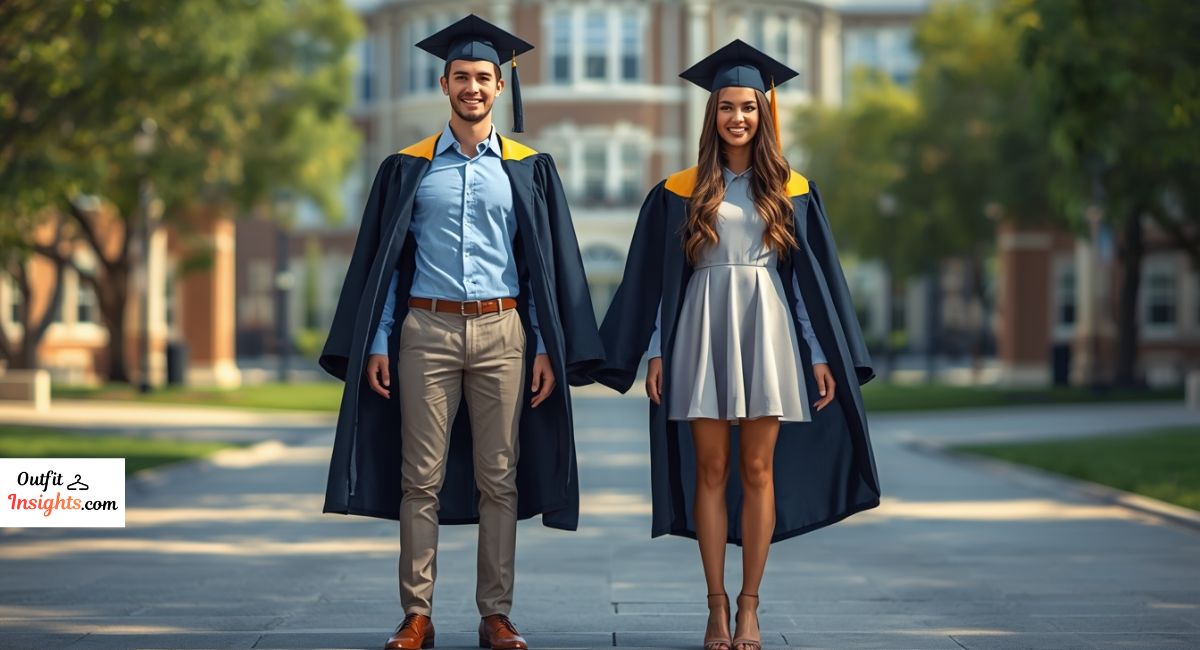
Figuring out what to wear under cap and gown is one of those graduation day details that seems simple until you actually start thinking about it, and then it suddenly feels like a decision with too many variables and not enough clear answers. You want to look polished and put together in your graduation photos. You want to stay comfortable through what is often a long, warm ceremony. You want your outfit to work both under the gown during the event and on its own for photos before and after. And you want to avoid the specific mistakes that make graduation day outfits look awkward, underdressed, or completely wrong for the occasion.
What you wear under your graduation gown matters more than most people expect. The gown covers most of your body, but your neckline, collar, shoes, and the few inches of clothing visible below the hem all show clearly in every photograph taken that day. More importantly, after the ceremony when the gown comes off, your outfit needs to work completely independently for the celebration, the family photos, and everything else that graduation day involves.
This guide covers everything you need to know about what to wear under cap and gown — for women and men separately, for different dress codes and ceremony environments, for senior picture sessions that include cap and gown elements, and for the full day from ceremony to celebration. It also addresses the practical comfort considerations that matter during a ceremony that can last several hours, often in warm weather or an outdoor setting.
1. Understand What the Gown Actually Covers and Shows
Before choosing what to wear under a cap and gown, you need to understand exactly what your specific gown reveals and what it conceals, because this varies more than most people realize.
Gown Length and Coverage
Graduation gowns typically fall somewhere between mid-calf and ankle length depending on the institution and the academic level of the ceremony. High school graduation gowns are often slightly shorter and lighter in fabric than college graduation gowns. Graduate school regalia tends to be heavier and more formal. The specific length of your gown determines how much of your lower outfit — including trousers, skirt, or dress hem — will be visible below it.
As a general rule, anything that falls more than two or three inches above the gown hem will be visible during the ceremony and in photographs. This means that if your gown hits mid-calf, a dress or skirt that falls at the knee will show a visible gap. Plan your lower outfit with the specific length of your gown in mind.
What Always Shows Regardless of Gown Length
Three elements of your outfit will always be clearly visible regardless of gown length and regardless of whether the gown is open or closed at the front. Your neckline and collar area show above the gown and feature prominently in close-up graduation portrait shots. Your shoes are fully visible at all times and appear in every full-length photograph. And the few inches of your outfit visible below the gown hem appear in most standing and walking photographs from the ceremony itself.
These three visible zones deserve the most attention in your outfit planning because they are the elements that will actually appear in your graduation photographs and form the visual impression your cap and gown look creates.
The Photo Consideration
Graduation photography involves two distinct types of shots that your outfit needs to serve simultaneously. Gown-on photographs — taken during the ceremony, at the podium, in processional — show your neckline, shoes, and lower hem. Gown-off photographs — taken before the ceremony begins, after it ends, and during any dedicated photo session — show your complete outfit and need to work entirely on their own.
Your cap and gown outfit needs to be planned for both contexts. An outfit that looks great under the gown but looks underdressed or awkward without it is not the right choice for graduation day.
2. What to Wear Under Cap and Gown for Women
Women have the widest range of appropriate and attractive options for what to wear under cap and gown. The key is finding the balance between formal enough for a significant ceremonial occasion, comfortable enough for several hours of sitting, standing, and walking, and photogenic enough to look great in the photographs that will mark this milestone for years.
Dresses
A dress is the most popular and consistently most practical choice for women wearing a graduation gown. A dress eliminates the need to coordinate separates, creates a clean, complete look when the gown comes off, and typically provides the comfort needed for a long ceremony.
The ideal dress length for wearing under a cap and gown sits at or just below the knee. This length works with most gown hemlines, creates a polished and appropriate appearance when the gown opens during movement, and looks elegant in both gowned and gown-off photographs. A dress that falls at mid-thigh will look noticeably short and disproportionate beneath a long graduation gown and will feel underdressed once the gown is removed for post-ceremony photos.
In terms of style, a wrap dress, a fit-and-flare silhouette, or a simple sheath dress all work beautifully under graduation gowns. These silhouettes create flattering shapes that are also comfortable for extended wear. Avoid dresses with very full, voluminous skirts as they can bulk underneath the gown and create an unflattering silhouette in photographs.
Color choice for the dress matters particularly in relation to your gown color. If your graduation gown is black, almost any dress color will work well underneath, and a pop of color can look beautiful in gown-off photographs. If your gown is a school color like royal blue, crimson, or green, a neutral dress in white, ivory, cream, or champagne underneath creates a clean and elegant contrast.
Blouse and Skirt Combinations
A well-fitted blouse with a conservative midi skirt or pencil skirt is a strong alternative to a dress for women who prefer separates or who want more flexibility in their graduation day outfit. The blouse should have a clean, defined neckline that looks polished above the gown collar, and the skirt should fall at or below the knee to work proportionately with the gown hemline.
Tucking the blouse into the skirt creates a cleaner, more polished silhouette both under the gown and in gown-off photographs. A blouse that hangs loose over a skirt can look unfinished when the gown is removed, particularly in formal graduation portraits.
Dress Pants and Tailored Trousers
Tailored dress pants or wide-leg trousers are an excellent choice for women who prefer a non-dress option under their graduation gown. Well-fitted trousers in a neutral color — black, navy, cream, or caramel — look polished and intentional under a gown and work beautifully for gown-off photographs paired with a blouse or fitted top.
The trouser hemline should be considered in relation to the gown length. If the gown hits mid-calf, full-length trousers will be largely hidden during the ceremony but will look complete and polished when the gown is removed. Cropped trousers that fall above the gown hem can create an awkward visual break in longer gown styles.
Shoes for Women Under Cap and Gown
Shoes deserve dedicated thought for graduation day because they are fully visible throughout the entire ceremony and appear in every photograph regardless of gown coverage. The footwear also needs to support you through what may be hours of walking, standing in line, and navigating stage steps.
Heeled sandals, block-heel shoes, pumps, and dressy flat shoes in leather or suede all work beautifully for graduation. The most important factor is that you have worn these shoes before and know you can walk confidently in them. Graduation day is not the time to debut brand new heels on an unfamiliar stage with steps.
Nude, metallic, white, and classic black shoes are the most versatile footwear choices for graduation as they work with virtually any dress or trouser color and complement both the gown and the gown-off look.
3. What to Wear Under Cap and Gown for Men
What to wear for graduation men follows clearer and more established conventions than women face, but the choices still matter significantly and are worth approaching with genuine thought rather than default to whatever happens to be in the wardrobe.
Dress Shirt and Trousers
A crisp, well-pressed dress shirt in white or a pale, muted solid color paired with well-fitted dress trousers is the most universally appropriate and most widely chosen option for men wearing a graduation gown. This combination strikes the right balance between formal enough for a significant ceremonial occasion and comfortable enough for an extended event.
The dress shirt collar sits above the graduation gown neckline and is one of the most visible elements of the entire look in close-up graduation portraits. It needs to be freshly laundered and pressed, fitted correctly at the neck so it lies flat without bunching or gaping, and in a color that works cleanly with the gown color above it. White and pale blue are the most reliable and most photographically clean choices.
Dress trousers in black, charcoal, or navy coordinate with virtually all graduation gown colors and look polished and complete when the gown is removed for post-ceremony photographs and celebrations.
Suits and Blazers
A full suit or a blazer over dress trousers elevates a graduation outfit to its most formal and visually impressive level. For men who want their cap and gown photographs to look genuinely distinguished and for those whose graduation ceremony or post-ceremony celebration warrants a higher level of formality, a suit is the strongest choice available.
A navy or charcoal suit under a graduation gown creates a look that photographs with real authority and elegance. The suit jacket will be largely invisible under the gown during the ceremony, but it elevates the collar and overall appearance even when covered, and it produces outstanding gown-off photographs that stand apart from the standard graduation portrait.
For seniors who are also doing dedicated senior picture sessions that include cap and gown elements, a suit underneath provides a polished foundation that works across all the shots in the session. Our guide on Men Senior Picture Ideas 2026: The Ultimate Guys Guide covers how to combine cap and gown with personal outfit elements for senior photo sessions in detail.
The Tie Question for Graduation
Including a tie under a graduation gown is a personal choice that depends on the formality of the ceremony, the level of celebration planned afterward, and individual preference. A tie adds a visible formality element at the collar that shows above the gown and communicates an elevated level of occasion-appropriate dress.
If you are wearing a full suit, a tie makes complete sense and creates a cohesive, formal look. If you are wearing a dress shirt and trousers without a blazer, a tie adds polish without requiring the full suit commitment. Choose a conservative solid or subtly patterned tie in a color that complements both the dress shirt and the gown color.
Shoes for Men Under Cap and Gown
Men’s footwear for graduation follows the same principle as for women — the shoes are fully visible throughout the entire ceremony and need to be appropriate, comfortable, and well-maintained. Clean, polished leather dress shoes in black or dark brown are the most appropriate footwear choice for a graduation ceremony. They coordinate with all standard graduation gown colors, look clean and intentional in photographs, and provide the formality that the occasion deserves.
Ensure your dress shoes are clean and polished before graduation day. Scuffed, unpolished dress shoes undermine the polished appearance of an otherwise well-chosen outfit and are clearly visible in full-length ceremony photographs.
4. Cap and Gown Outfit Ideas for Different Ceremony Types
The type of graduation ceremony you are attending affects the appropriate level of formality for what you wear underneath, and understanding these distinctions helps you make the right choice for your specific situation.
High School Graduation
High school graduation ceremonies typically fall at the smart casual to business casual level of formality. They are significant milestone celebrations but usually take place in gyms, sports facilities, or outdoor venues that are warm and physically active environments. Comfort is a meaningful practical consideration alongside appearance.
For high school graduation, women can lean toward lighter fabrics and slightly less formal silhouettes while still meeting the dressiness expectations of the occasion. A wrap dress in a breathable fabric, a blouse with a midi skirt, or smart trousers with a fitted top all work well. Men can wear a well-fitted dress shirt and dress trousers without necessarily needing a suit, though a blazer is always a polished addition.
College and University Graduation
College graduation ceremonies tend to be more formal, longer in duration, and more photographically significant than high school ceremonies. The expectation of dress is generally higher, and the celebration plans following the ceremony often involve more formal contexts like restaurant dinners or family gatherings.
For college graduation, women should lean toward their most formal dress or trouser option. A knee-length dress or tailored separates in a polished fabric and a flattering color will serve both the ceremony and post-ceremony celebrations well. Men should seriously consider a suit or at minimum a blazer with dress trousers. A well-fitted suit worn to a college graduation creates graduation portrait photographs that look genuinely distinguished.
Graduate School and Professional Degree Ceremonies
Graduate school commencements — particularly for professional degrees like law, medicine, and business — are the most formal graduation context and warrant the highest level of appropriate dress underneath the academic regalia. Business professional attire is the appropriate minimum. A full suit for men and a tailored suit or formal dress for women creates the right balance between the gravity of the occasion and the celebratory nature of the milestone.
5. Graduation Day Outfit Planning for Senior Pictures
Many graduating seniors schedule dedicated senior picture sessions that include cap and gown shots alongside regular portrait looks. Planning what to wear under cap and gown for a senior picture session requires slightly different thinking than planning purely for ceremony comfort and appearance.
In a senior picture session, the cap and gown shots are typically taken with more time, more intentional framing, and more variety in poses and settings than ceremony photographs allow. This means your outfit underneath the gown has more opportunity to contribute meaningfully to the final images, and that the specific combination of gown and underlying outfit will be evaluated more closely.
For senior picture cap and gown shots, prioritize the neckline and collar area above all else since this is what appears in close-up portrait framing. A crisp white dress shirt collar for men or a clean, defined neckline in a complementary color for women creates the cleanest and most polished close-up results.
The combination of cap and gown with meaningful personal elements — a sport uniform, an instrument, items that reflect your specific identity and interests — creates senior pictures that stand apart from standard graduation portraits. The clothing underneath the gown anchors the personal style element of these combined shots. Our comprehensive Senior Picture Ideas 2026: Best Ideas for Girls, Guys & Every Style covers how to structure a senior picture session that includes cap and gown alongside other personal elements in full detail.
Outfit Continuity Between Senior Pictures and Ceremony
If your senior picture session and your graduation ceremony happen close together, planning an outfit that works across both contexts is a practical and worthwhile consideration. An outfit that photographs beautifully in a dedicated portrait session, looks polished under the gown during the ceremony, and works independently for post-ceremony celebrations represents the ideal graduation day wardrobe solution.
This continuity is easier to achieve than it sounds. A well-chosen dress or suit that is appropriate for senior picture formality is almost always also appropriate for ceremony wear and post-ceremony celebration. The key is choosing quality fabrics that stay fresh and unwrinkled through a long day and a silhouette that continues to look intentional after hours of wear.
6. What Colors Work Best Under a Graduation Gown
Color planning for what to wear under a graduation gown involves both the relationship between the underlying outfit and the gown itself and the appearance of the complete look in photographs.
Coordinating With Your Gown Color
The most important color relationship is between your underlying outfit and the specific color of your graduation gown. This relationship determines how the visible portions of your outfit — neckline, hem, shoes — interact with the gown in photographs.
Black graduation gowns are the most versatile and forgiving in terms of underlying outfit color. Almost any color beneath a black gown works well, and this is an opportunity to wear a color that genuinely suits your skin tone and personal style. Jewel tones like sapphire, emerald, and deep burgundy look stunning beneath black gowns in graduation portraits. Neutrals like white, cream, and champagne create clean elegant contrast.
School-colored gowns in specific institutional colors require a bit more coordination thought. A bright royal blue gown pairs beautifully with white or ivory underneath. A crimson or deep red gown works well with black or neutral underneath. A forest green gown pairs cleanly with white, cream, or black.
Colors That Photograph Best in Graduation Portraits
Graduation portraits involve both wide ceremony shots and close-up portrait framing, and the colors that photograph best in these contexts follow the same principles that govern all portrait photography. Solid, rich tones in mid to deep ranges photograph with the most visual presence and clarity. Very pale, washed-out tones can disappear against light backgrounds or overexpose under direct light. Very dark tones can lose detail in shadow areas.
Blush, dusty blue, sage green, warm ivory, and soft champagne are among the most consistently flattering colors for graduation portrait photography for women. White and pale blue are most effective for men in collar and shirt contexts. Our guide on What Color Is Most Flattering for Photos? (Professional Photographers Reveal the #1 Hue) covers the specific photographic behavior of different colors in portrait contexts in detail that applies directly to graduation photo planning.
Color Coordination Table
| Gown Color | Best Underlying Colors | Colors to Avoid |
|---|---|---|
| Black | White, ivory, jewel tones, blush, champagne | Very dark tones that disappear |
| Royal Blue | White, ivory, cream, light grey | Similar blues that blend |
| Crimson or Red | Black, white, ivory, neutral | Competing reds or oranges |
| Forest Green | White, cream, black, champagne | Similar greens that blend |
| Gold or Yellow | White, ivory, navy, black | Competing warm tones |
| Purple | White, black, soft grey, champagne | Competing purples |
7. What to Avoid Wearing Under a Cap and Gown
Understanding what does not work under a graduation gown saves you from graduation day outfit regret. Several choices look reasonable in planning but consistently create problems in practice.
Very casual clothing — jeans, casual t-shirts, athletic wear, or anything that reads as everyday leisure clothing — is never appropriate under a graduation gown regardless of whether it will be visible during the ceremony. Graduation is a significant formal milestone, and the clothing worn beneath the regalia should honor that formality even when largely covered.
Very short hemlines on dresses or skirts create a visually awkward and disproportionate effect beneath a long gown. The visible section of a very short dress appearing below a long gown hemline looks unintentional and mismatched. Always ensure your dress or skirt hem falls at or below the knee for clean proportions with the gown.
Overly bulky or heavily layered outfits create unwanted volume under the gown and can cause the regalia to drape poorly and look shapeless rather than structured. Light to medium weight fabrics in well-fitted silhouettes create the cleanest look under graduation gowns.
Uncomfortable shoes that you have never worn before are one of the most consistently regretted graduation day choices. Graduation ceremonies involve long periods of standing, walking in processional, climbing stage steps, and navigating crowded venues. Shoes that cause pain or that you cannot walk confidently in create a distraction and a liability throughout the entire day.
Heavily wrinkled or poorly maintained clothing is visible wherever your outfit extends beyond the gown and undermines the polished impression the entire outfit is meant to create. Press and prepare everything the night before graduation day.
For a broader understanding of the clothing choices that consistently undermine formal occasion photography and appearance, our article on What to Avoid Wearing in Family Photos: 7 Mistakes Ruining Your Pictures covers the same foundational principles that apply to graduation day outfit planning.
8. Practical Comfort Considerations for Graduation Day
Comfort under a graduation gown is a genuine practical consideration that deserves as much thought as appearance, particularly given the duration and physical demands of most graduation ceremonies.
Temperature and Fabric Choice
Graduation ceremonies frequently take place in late spring or early summer, often in venues that are crowded, poorly ventilated, or entirely outdoors in warm weather. Wearing a heavy, non-breathable outfit under a graduation gown in these conditions creates genuine discomfort that affects your experience of the ceremony and your appearance in photographs taken throughout the day.
Natural, breathable fabrics — cotton, linen, light jersey, and chiffon — keep you significantly cooler under a graduation gown than synthetic fabrics or heavy woven materials. If your ceremony is outdoors or in a venue known to run warm, fabric choice becomes a practical priority alongside aesthetic considerations.
For winter ceremonies in cold venues, the layering opportunity that a graduation gown provides is genuinely useful. A lightweight fitted layer beneath a dress or blouse adds warmth without adding visible bulk, and the gown itself provides an additional insulating layer over everything.
Movement and Duration
Graduation ceremonies typically last between one and three hours and involve repeated cycles of sitting, standing, walking in processional, climbing steps to a stage, crossing a stage to receive a diploma, and returning to a seat. Your outfit needs to accommodate all of this movement naturally and without restriction.
Anything that restricts your stride, requires constant adjustment, bunches uncomfortably when seated for extended periods, or causes you to think about your clothing rather than your experience is the wrong choice for graduation day. Try your complete outfit and shoes on for at least 30 minutes before the day itself, sitting and standing repeatedly, to confirm that everything moves with you naturally.
The After-Ceremony Consideration
Graduation day typically extends well beyond the ceremony itself into family dinners, celebration gatherings, and photo sessions that can continue for many hours. Your outfit needs to stay looking fresh and polished through this extended day without requiring changes or significant maintenance.
Fabrics that resist wrinkling, silhouettes that continue to look intentional after hours of wear, and shoes comfortable enough to be worn through a long celebration all contribute to an outfit that serves the complete graduation day experience rather than just the ceremony itself.
9. Putting It All Together: Complete Graduation Outfit Formulas
Having a complete, coordinated outfit formula that works from morning through post-ceremony celebration removes the decision-making stress from graduation day and ensures everything works together as a complete visual presentation.
Complete Formula for Women
The most reliable graduation day outfit formula for women is a knee-length dress in a flattering solid color or subtle print, in a breathable natural fabric, paired with clean dressy footwear that has been worn before graduation day. Add minimal jewelry that does not jingle or draw attention during the ceremony. Choose a dress with a defined neckline that looks polished above the gown collar. Carry a small clutch or leave a bag with family for the ceremony itself. This formula works for every graduation context from high school through graduate school.
Complete Formula for Men
The most reliable graduation day outfit formula for men is a freshly pressed dress shirt in white or pale blue, well-fitted dress trousers in black or charcoal, clean polished leather dress shoes, and an optional blazer or suit jacket that elevates the look for more formal ceremonies or post-ceremony celebrations. A conservative tie is optional and appropriate for higher formality contexts. This formula is comfortable, universally appropriate, and photographs cleanly in every graduation portrait context.
Complete Graduation Outfit by Ceremony Type
| Ceremony Type | Women | Men |
|---|---|---|
| High school graduation | Wrap dress or blouse and midi skirt | Dress shirt, dress trousers, optional blazer |
| College graduation | Fitted dress or tailored separates | Suit or blazer with dress trousers |
| Graduate or professional degree | Tailored suit or formal dress | Full suit with tie |
| Outdoor summer ceremony | Breathable knee-length dress | Light dress shirt, linen or cotton trousers |
| Indoor formal ceremony | Structured dress or pantsuit | Dark suit, dress shirt, tie |
For additional guidance on how to put together a complete look that photographs well and presents your best self on camera, our guide on How to Look Good in Professional Photos: 12 Proven Tips covers the principles of photogenic dressing that apply directly to graduation portraits.
10. How Graduation Outfit Choices Affect Your Photos
Graduation photographs are among the most saved, shared, displayed, and emotionally significant photographs most people will ever have taken. The choices you make about what to wear under cap and gown affect how these photographs look and how you feel about them for the rest of your life.
The most common graduation photo regret is being underdressed beneath the gown. When the gown comes off for family portraits and celebration photographs, an outfit that was not thought through for that context can look jarring or underprepared next to family members who dressed specifically for the occasion. Planning your underlying outfit as its own complete, polished look rather than as a hidden layer solves this problem entirely.
Understanding the full range of factors that affect how you look in photographs on significant occasions like graduation connects to broader principles of photogenic dressing and presentation that our guide on Why Some People Look More Photogenic: The Surprising Truth About Camera Confidence covers in detail, including how clothing color, fit, and style contribute to overall photographic presence.
The effort you put into your graduation day outfit is an investment in photographs that will represent this milestone for decades. That investment consistently pays off in images you are proud of and that honor the significance of the occasion.
FAQs: What to Wear Under Cap and Gown
Graduation outfit questions consistently center on the same practical concerns. The following answers address the most frequently asked questions directly.
1. What is the best thing to wear under a graduation gown?
For women, a knee-length dress in a breathable fabric and a flattering solid color is the most practical and consistently polished choice. For men, a well-pressed dress shirt with tailored dress trousers and optional blazer provides the right balance of formality and comfort. Both should be chosen with both gown-on ceremony wear and gown-off post-ceremony photographs in mind.
2. Should you dress up under your graduation gown?
Yes, absolutely. Your graduation gown covers most of your outfit but not all of it, and the complete outfit needs to work on its own once the gown is removed for family photographs and post-ceremony celebrations. Dressing up appropriately under the gown ensures you look polished throughout the entire graduation day, not just during the ceremony.
3. What length dress should you wear under a graduation gown?
A dress that falls at or just below the knee is the most appropriate and most proportionately balanced choice for wearing under a graduation gown. Dresses that fall significantly shorter than the gown hemline can look unintentionally short and disproportionate in photographs. Aim for a hemline that falls within a few inches of or below the gown hem for the cleanest visual result.
4. Can men wear jeans under a graduation gown?
No. Jeans are not appropriate under a graduation gown regardless of how they are styled. Graduation is a formal ceremonial occasion and the outfit worn beneath the regalia should reflect that formality. Well-fitted dress trousers in a neutral color are the appropriate alternative for men who prefer a less formal look than a full suit.
5. What shoes should you wear to graduation?
Women should wear clean, dressy shoes that they have worn before graduation day and can walk confidently in for several hours. Heeled sandals, block heels, pumps, and dressy flats all work well. Men should wear clean, polished leather dress shoes in black or dark brown. Both should prioritize comfort and stability for a day that involves extended standing and walking.
6. What should you wear under a black graduation gown?
A black graduation gown is the most versatile in terms of underlying outfit color. Women can wear almost any flattering color beneath a black gown, with jewel tones, white, ivory, and blush all looking particularly strong. Men can wear any standard dress shirt color, with white and pale blue being the most classic and photographically clean choices. A black gown provides the most outfit flexibility of any graduation regalia color.
7. Do you need to wear anything special under your graduation gown for senior pictures?
For senior picture sessions that include cap and gown shots, prioritize the neckline and collar area since this is most visible in close-up portrait framing. A crisp, clean collar or defined neckline in a complementary color to your gown creates the strongest portrait results. Beyond that, the same principles apply as for ceremony wear, with additional attention to how the complete outfit works in the variety of poses and framings that a dedicated senior picture session involves.
8. How do you stay cool under a graduation gown?
Choose breathable natural fabrics like cotton, linen, and light jersey for the outfit beneath your gown. Avoid heavy synthetic materials, multiple thick layers, and anything that traps heat. Stay hydrated in the hours before the ceremony, arrive early to avoid rushing, and choose footwear that allows you to move freely without physical stress that generates additional body heat.
Graduation day is one of the most photographed milestones of your life, and the effort you invest in what you wear under your cap and gown shows in every image taken that day. According to The Knot, graduation is consistently ranked among the top five milestone events that families invest most significantly in professional photography for — a reflection of how lasting and meaningful these images truly are. Plan your outfit with the full day in mind, prepare everything in advance, and focus on being genuinely present for the occasion itself.