
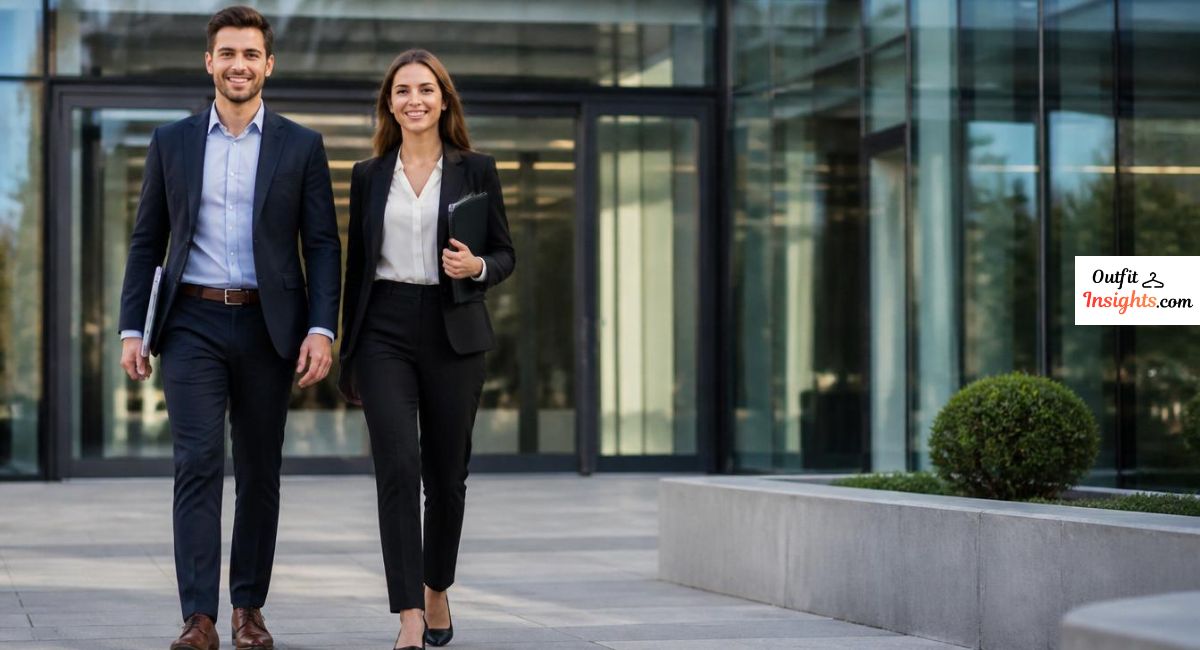
Knowing what to wear for a job interview is one of the most practically important style decisions you will ever make, and the stakes are real. Research consistently shows that hiring managers form their initial impression of a candidate within the first seven seconds of meeting them, and that appearance plays a significant role in that impression before a single interview question has been asked or answered. Your outfit does not get you the job on its own, but it absolutely sets the tone for everything that follows.
The challenge most people face when deciding what to wear for a job interview is that the rules have changed significantly over the past decade. The rise of remote work, the normalization of casual dress codes across entire industries, and the growing diversity of workplace cultures mean that the old universal answer of wearing your best suit is no longer reliably correct advice. What to wear for a job interview now depends on the specific industry, the company culture, the level of the role, and the specific context of the interview itself.
This guide covers everything you need to know about what to wear for a job interview across every major professional context. It addresses business professional attire, business casual dress, industry specific variations, interview outfits for men and women separately, what to wear for a video interview, what to wear to a job fair, what to wear for a campus visit, and all the practical preparation that ensures your outfit supports rather than undermines your interview performance.
1. Why Your Interview Outfit Matters More Than You Think
Before choosing what to wear for a job interview, it is worth understanding the specific psychological mechanisms through which your outfit affects the outcome of your interview, because this understanding shapes every decision you make about what to put on.
The Science of First Impressions
Psychological research on first impressions is consistent and well-replicated. Human beings form rapid, largely automatic judgments about competence, trustworthiness, and professional fit based on visual cues, and these judgments are disproportionately difficult to revise once formed. In an interview context, where the hiring manager is explicitly evaluating your fit for a professional role, these appearance-based judgments carry particular weight.
A candidate who walks into an interview dressed appropriately, carefully, and in a way that signals awareness of professional norms has already communicated competence and cultural awareness before saying anything. A candidate whose outfit is inappropriate for the context, careless in its preparation, or misaligned with the professional culture of the organization has already introduced a negative signal that their words will have to work against.
Dressing for the Role You Want
One of the most practically useful frameworks for what to wear for a job interview is to dress for the role you are interviewing for rather than the role you currently hold. This means researching the professional culture of the organization, understanding the dress norms of people who already hold the role you are seeking, and choosing an outfit that positions you as someone who already belongs in that environment.
This does not mean dressing identically to current employees. It means understanding the dress code culture of the organization well enough to make a choice that demonstrates cultural intelligence and professional self-awareness.
2. Understand the Dress Code Before Choosing Your Outfit
The single most important preparatory step in deciding what to wear for a job interview is researching the specific dress code culture of the organization you are interviewing with. Interview outfit choices that are appropriate for one organization can be completely wrong for another, and the variation across industries and company cultures is significant.
How to Research Company Dress Culture
The most direct way to understand a company’s dress culture is to look at their public-facing visual presence. Company websites, LinkedIn pages, and social media accounts often feature photographs of employees in professional contexts that give you an accurate sense of how people actually dress in that environment. A law firm whose website features employees in formal suits communicates different dress expectations than a technology startup whose Instagram shows employees in hoodies and jeans.
Glassdoor reviews and employee testimonials frequently mention dress culture as part of their workplace descriptions. If you have any existing connection to someone at the organization, asking them directly about typical interview dress is entirely appropriate and demonstrates the kind of practical research orientation that employers value.
If you cannot find any specific information about the company’s dress culture, default to one level above whatever you estimate their everyday dress code to be. Slightly overdressing for an interview is almost never held against you. Underdressing frequently is.
When to Ask the Recruiter
If you are genuinely uncertain about appropriate interview dress after your own research, asking the recruiter or HR contact who scheduled your interview is a completely acceptable and often appreciated question. Framing it as wanting to ensure you present yourself appropriately demonstrates care and professionalism rather than uncertainty or insecurity.
3. Business Professional Attire for Job Interviews
Business professional attire for job interviews represents the highest and most formal level of interview dress. It is appropriate for interviews in law, finance, banking, consulting, corporate executive roles, and any other industry where formal professional dress is the daily norm.
Business Professional for Women
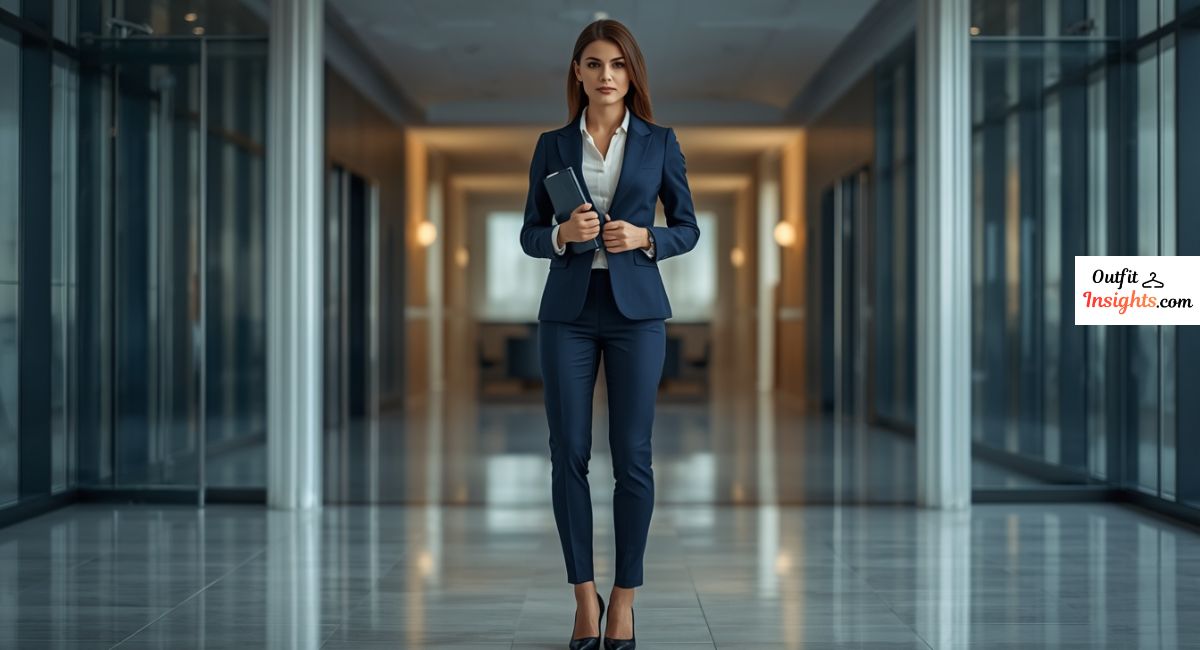
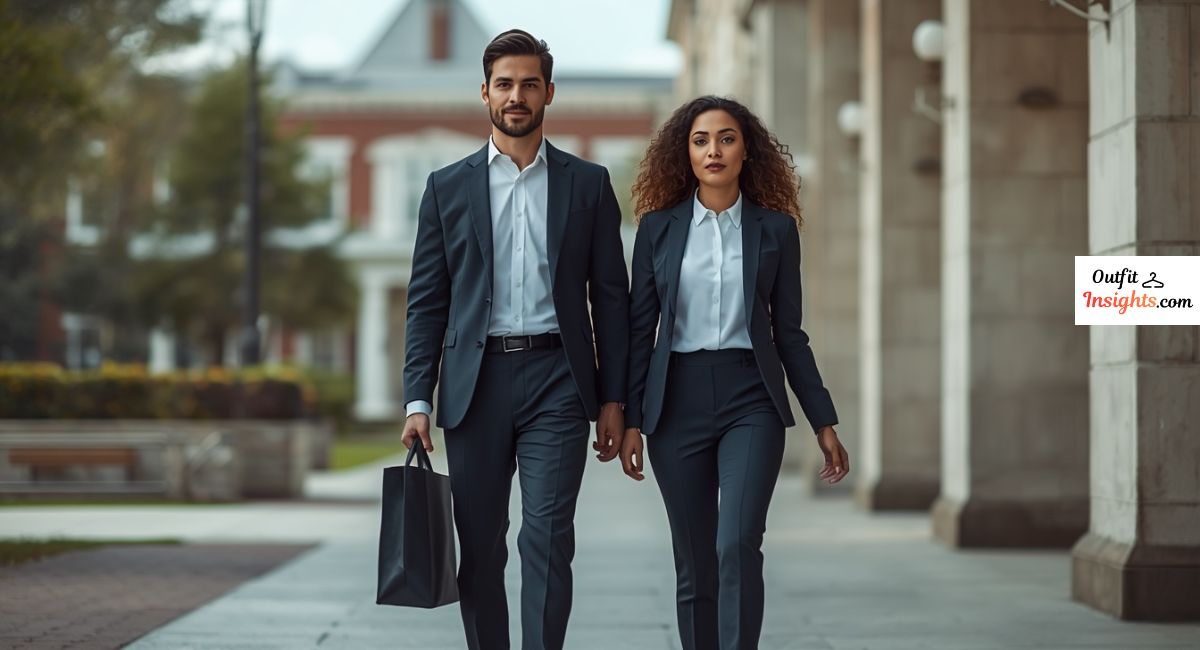
For women, business professional interview attire centers on a well-fitted suit in a dark, conservative color. A tailored pantsuit or skirt suit in black, charcoal, dark navy, or deep grey is the most appropriate and most universally strong choice for formal professional interview contexts. The suit should fit correctly across the shoulders and through the waist, be freshly pressed, and be in excellent condition.
The blouse or shirt worn beneath the suit jacket should have a conservative neckline, be in a solid or subtly patterned color that complements the suit, and be tucked in cleanly. White, pale blue, soft ivory, and muted rose are all strong blouse color choices for business professional interviews.
Closed-toe shoes with a modest heel in black or dark leather complete the business professional look appropriately. Footwear should be clean, unscuffed, and in good repair. Jewelry should be minimal and professional. A structured handbag or professional portfolio in a neutral color completes the look without drawing attention to itself.
Business Professional for Men
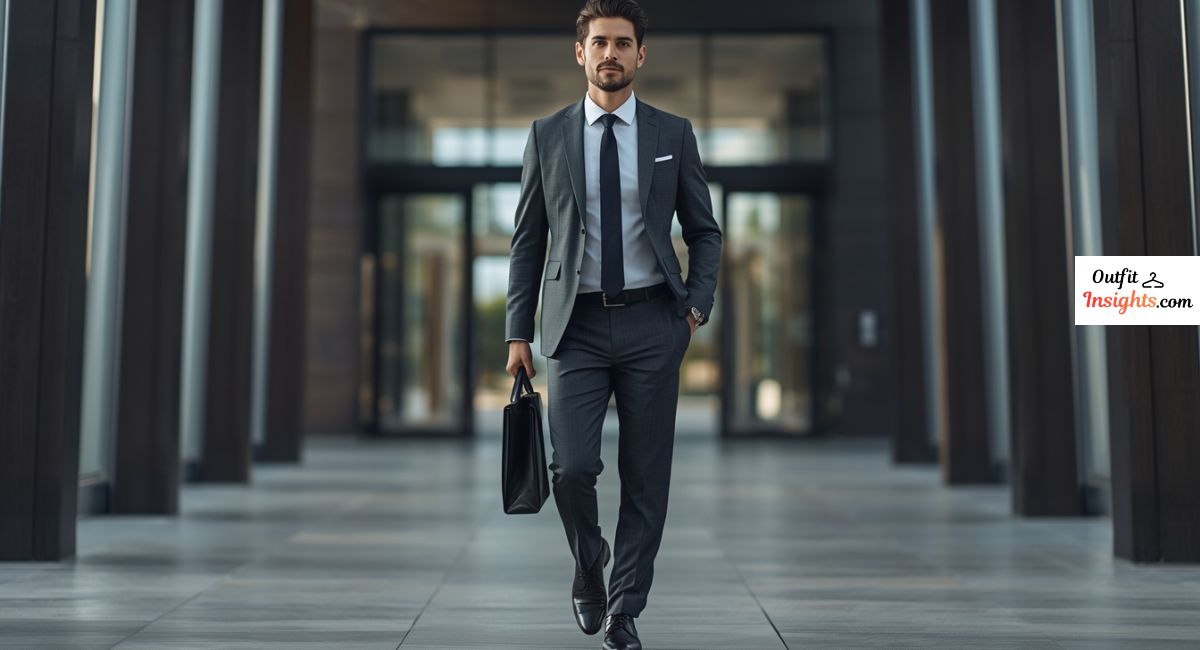
For men, business professional interview attire means a well-fitted dark suit in navy, charcoal, or dark grey paired with a freshly pressed dress shirt and a conservative tie. The suit fit is paramount. A suit that fits correctly across the shoulders, through the chest, and at the trouser break communicates the same attention to detail and professional self-awareness that employers in formal industries are specifically looking for.
The dress shirt should be white or pale blue for the most reliable and photographically clean result. The tie should be conservative in color and pattern. A solid tie or one with a subtle woven pattern is appropriate. Bold, novelty, or brightly colored ties introduce unnecessary visual noise into a context where understated confidence is the goal.
Clean, polished leather dress shoes in black or dark brown complete the business professional interview look. Ensure shoes are polished and in good repair before the interview. A briefcase or professional portfolio is appropriate and practical for carrying any documents you bring.
4. Business Casual Attire for Job Interviews
Business casual interview attire occupies the large middle ground between formal business professional dress and everyday casual clothing. It is appropriate for interviews in technology, media, education, healthcare administration, creative industries, and any organization where everyday dress is smart but not formally suited.
Business Casual for Women
Business casual interview attire for women offers more variety than business professional while still requiring a clearly intentional level of professional dress. Well-fitted dress trousers or a conservative midi skirt paired with a polished blouse or fitted top is the foundation of a strong business casual interview outfit. A blazer layered over this combination elevates it toward the more professional end of the business casual spectrum, which is where interview attire should generally sit.
A conservative dress at or below the knee in a solid or subtly patterned fabric is also appropriate for business casual interviews. The dress should not be form-fitting to the point of being distracting and should have a modest neckline appropriate for a professional evaluation context.
Color choices for business casual interview attire are somewhat more flexible than for business professional dress, but the same general principle of subdued, professional tones applies. Navy, teal, dusty rose, sage green, and warm rust can all work beautifully in business casual interview contexts when worn in conservative silhouettes.

Business Casual for Men
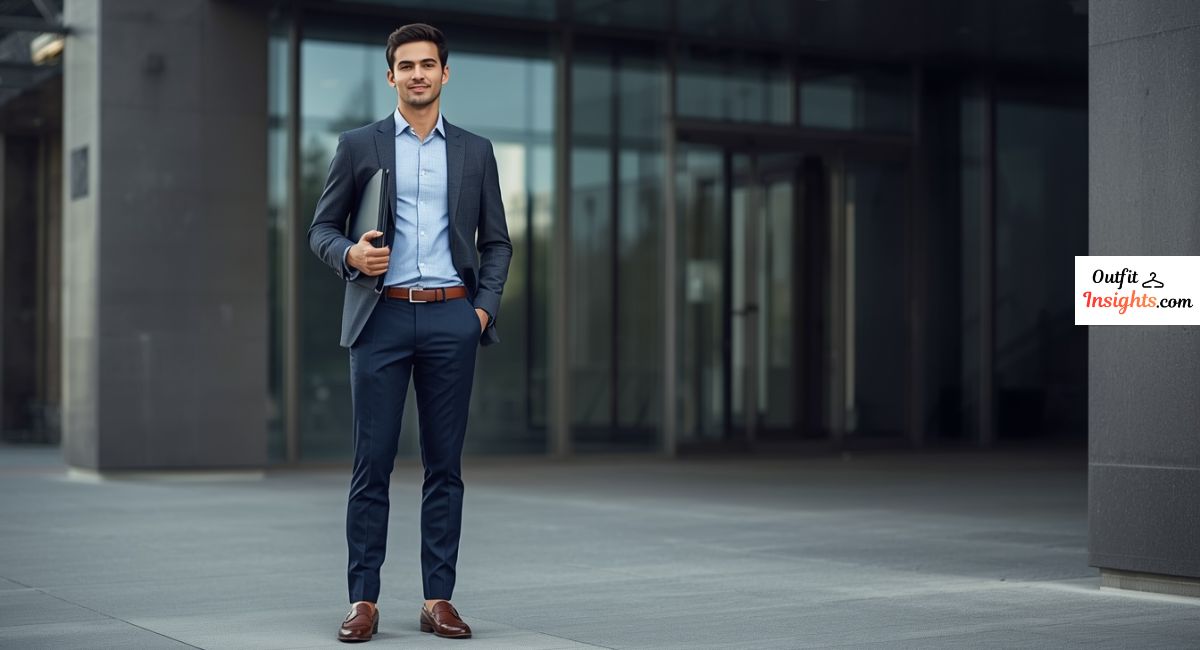
Business casual interview attire for men typically means well-fitted dress trousers with a collared dress shirt and optional blazer or sport coat. The key word is fitted. Business casual should never read as casual. A loose, wrinkled dress shirt with ill-fitting chinos is not business casual interview attire regardless of how it might read in a casual office context.
Chinos in a conservative color like navy, charcoal, or khaki with a well-pressed dress shirt and a blazer create a polished business casual interview look that communicates professionalism and awareness without the formality of a full suit. Clean leather shoes or leather dress loafers complete the look appropriately.
A tie is optional for business casual interview attire but can be included as a sign of additional respect for the occasion. If you include one, keep it conservative in color and pattern.
5. Industry Specific Interview Outfit Guidance
What to wear for a job interview varies meaningfully across different industries, and understanding these industry-specific norms prevents you from making dress choices that are technically correct in a general sense but wrong for a specific professional context.
Finance, Law, and Corporate
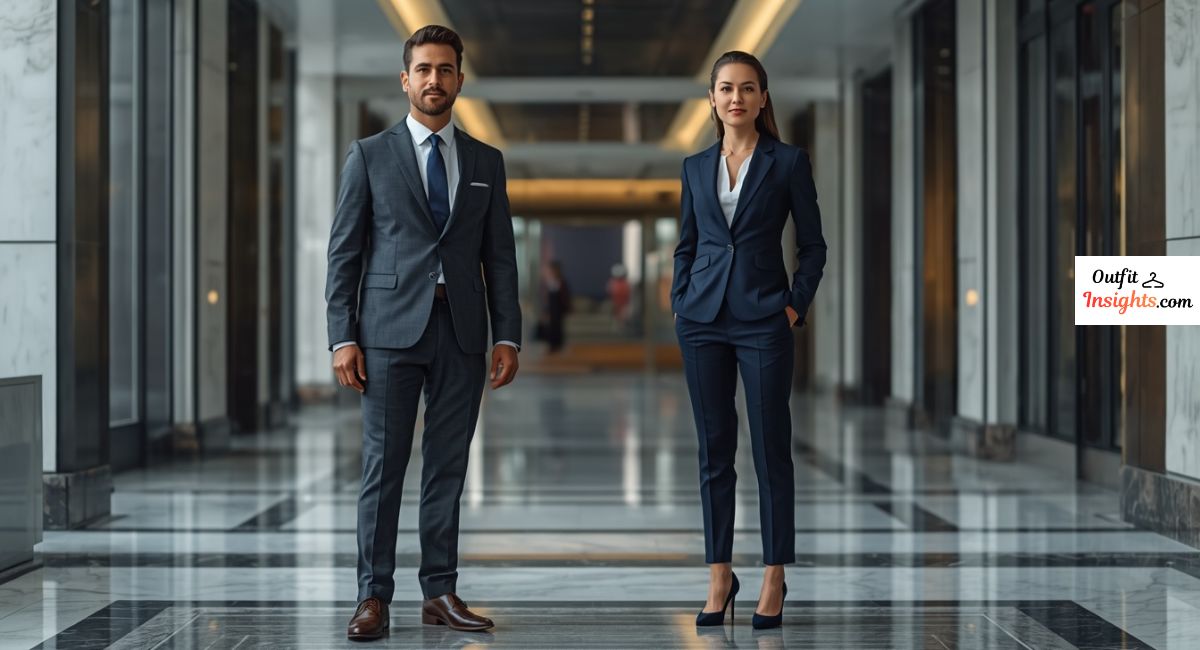
These industries maintain the most formal and consistent dress expectations of any professional sector. Business professional attire is the appropriate minimum for any interview in these fields regardless of the specific role level. A full suit for both men and women is strongly recommended. Deviation from conservative formal dress in these contexts is noted and remembered in ways that it would not be in more casual industries.
Technology and Startups
Technology companies and startups occupy the widest range of dress culture of any industry sector. Some technology companies maintain relatively formal dress expectations. Many have entirely casual everyday cultures. The appropriate interview dress depends on the specific company rather than the industry category as a whole.
For technology interviews, business casual is typically the appropriate baseline. Erring slightly above the everyday dress culture of the organization demonstrates respect for the interview context without appearing out of touch with the company’s values. Wearing a full suit to a startup interview in a company known for casual culture can actually work against you by signaling poor cultural research or cultural fit.

Healthcare and Medical
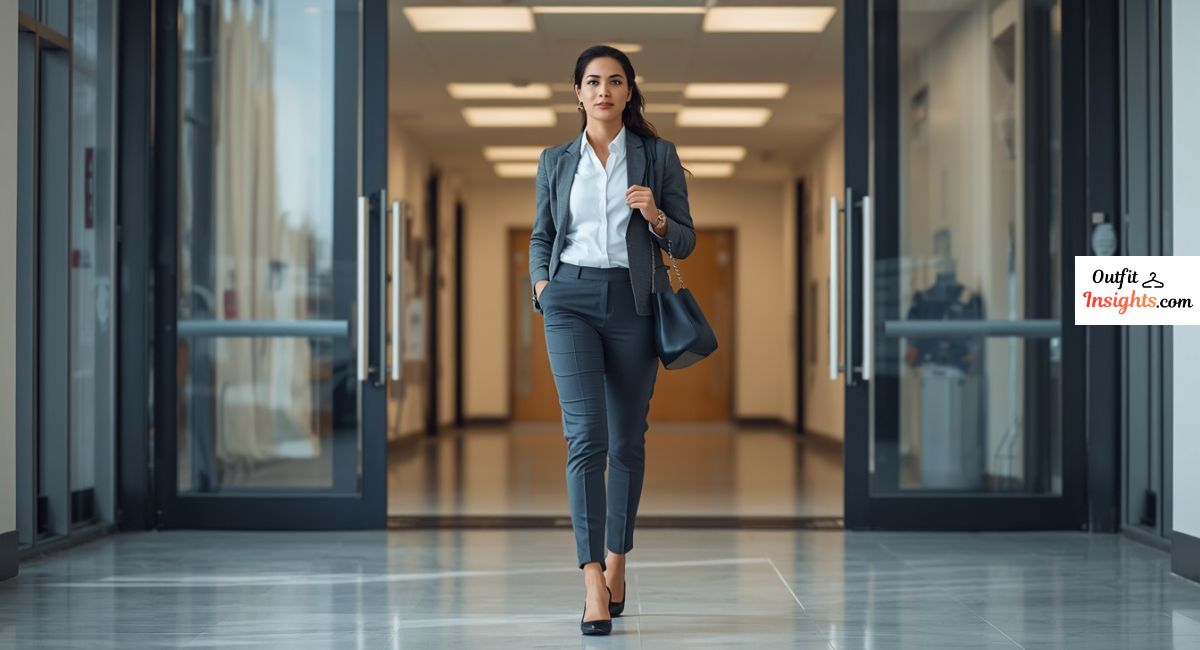
Healthcare interview attire depends significantly on the specific role. Clinical roles in healthcare have specific practical requirements around appropriate professional dress. Administrative and management roles in healthcare organizations typically call for business professional or business casual attire following the same general principles as corporate environments.
For any clinical role interview, research the specific dress expectations of the institution. Many clinical environments have specific requirements around footwear, jewelry, and accessories that are driven by patient safety considerations as much as professional appearance norms.
Creative Industries
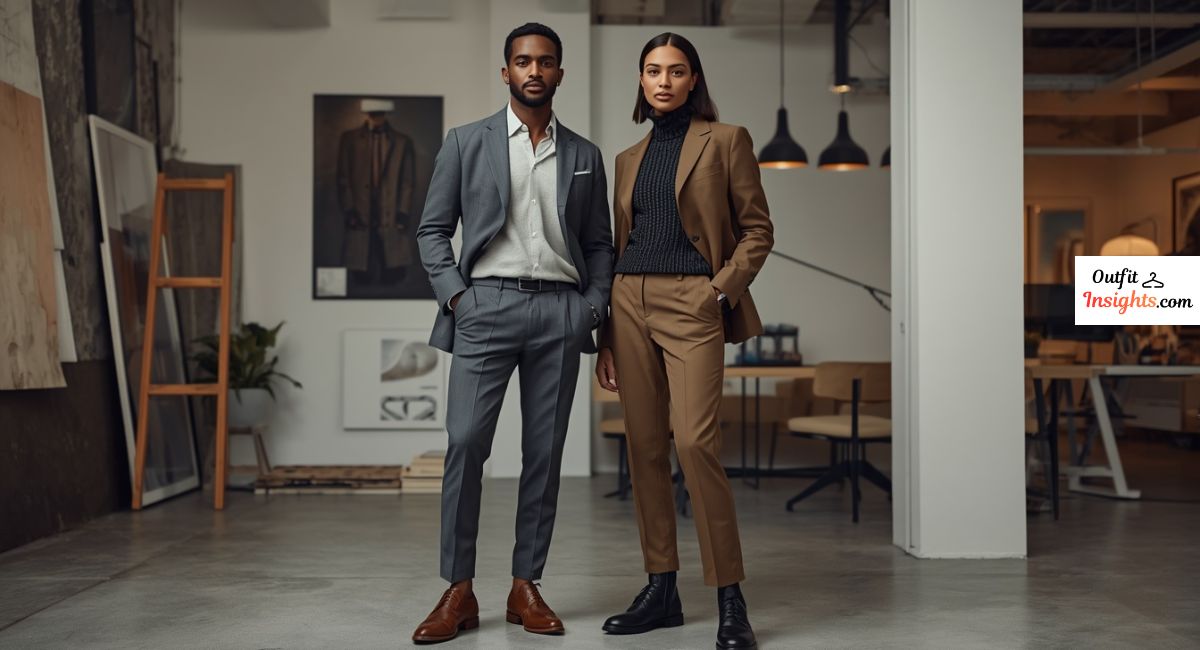
Advertising, design, media, and related creative fields allow for and often reward a degree of personal style expression in interview attire that more conservative industries do not. The goal in creative industry interviews is to demonstrate both professional awareness and personal creative identity. A well-chosen outfit that shows genuine personal style within professionally appropriate boundaries communicates creative confidence.
Even in creative industries, the interview context calls for a step above everyday dress. A polished, creatively personal outfit communicates cultural intelligence and self-awareness. Overly casual dress communicates a failure to recognize the distinction between a regular workday and a professional evaluation context.
Interview Outfit by Industry
| Industry | Recommended Level | Specific Guidance |
|---|---|---|
| Law and finance | Business professional | Full suit, conservative tie for men |
| Corporate executive | Business professional | Dark suit, formal accessories |
| Technology | Business casual | Blazer optional, no tie required |
| Startup | Smart casual to business casual | Research culture specifically |
| Healthcare admin | Business casual | Conservative colors, closed-toe shoes |
| Education | Business casual | Approachable and professional |
| Creative fields | Smart business casual | Personal style within professional bounds |
| Retail and hospitality | Business casual | Clean, practical, well-fitted |
6. What to Wear for a Video Interview
What to wear for a video interview requires a specific approach that accounts for the technical realities of how you appear on a camera screen rather than in person. The visual rules of video appearance differ from in-person appearance in ways that meaningfully affect what works and what does not.
Colors for Video Interviews
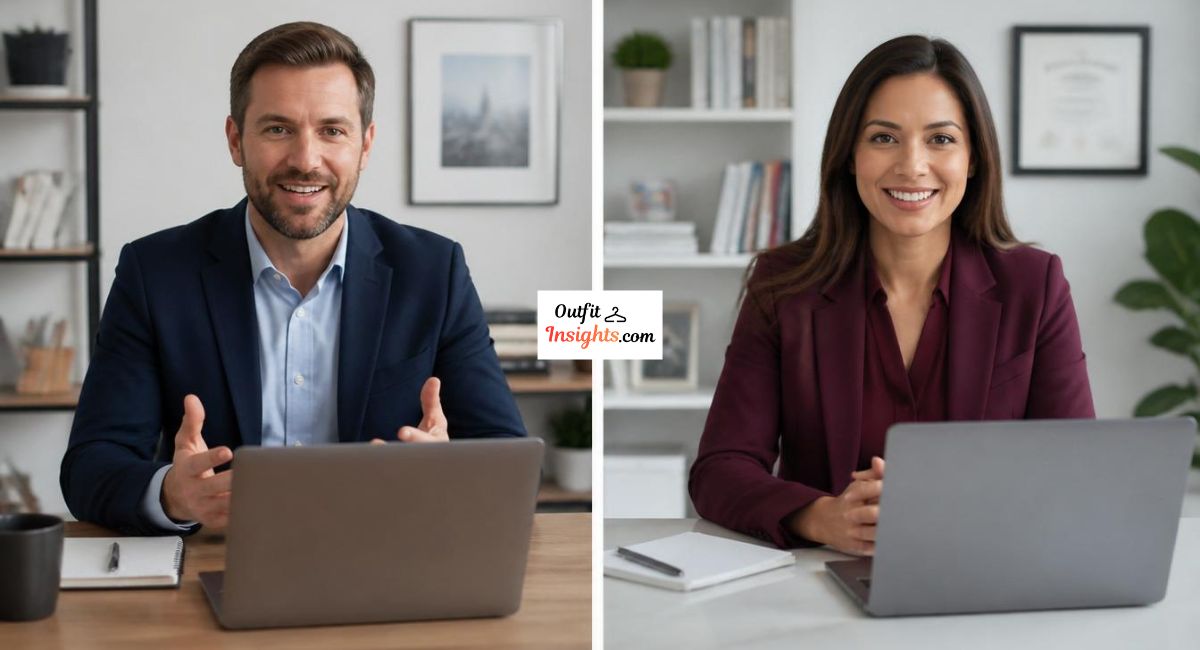
Color choice for video interviews is critically important because camera sensors and typical monitor displays handle colors differently than the human eye perceives them in person. Solid, medium to rich tones photograph and display most clearly and most professionally on camera.
Avoid wearing white or very light tones for a video interview if your background is also light colored. The contrast between a light outfit and a light background can reduce your visual presence on screen. Conversely, wearing very dark tones against a very dark background creates a similar problem. Choose your outfit color in relation to the background you will be sitting against.
Avoid patterns, particularly fine stripes, houndstooth, and small geometric repeats, because these create the moiré visual distortion effect on camera that makes the fabric appear to shimmer or ripple in a distracting way. Solid colors are the most reliable choice for video interview attire.
Strong, rich solid tones like navy, teal, burgundy, deep green, and charcoal all display clearly and professionally on camera and create strong visual presence in a video frame. Our guide on What to Wear for a Professional Headshot: 12 Proven Tips covers color principles for camera appearance in detail that applies directly to video interview outfit planning.
The Waist Up Rule
Video interviews frame you from roughly the waist up, which means the upper half of your outfit receives all the visual attention. Your jacket, shirt, blouse, and neckline are the primary elements of your video interview outfit. Your trousers or skirt receive essentially no camera attention during the call itself.
This does not mean wearing your interview top with pajama bottoms, which has become a cultural joke about video work. It means concentrating your outfit preparation energy on the upper half while still dressing appropriately from head to toe in case you need to stand up or move during the call.
Lighting and Background
Your outfit choice for a video interview interacts directly with your lighting and background setup. A well-lit face with a clean, uncluttered background makes any appropriate interview outfit look more polished and professional. Poor lighting or a distracting background undermines even the most carefully chosen outfit by creating a chaotic or unprofessional overall visual impression.
Position yourself facing a natural light source or a soft artificial light source rather than sitting with a window or light source behind you, which creates a silhouette effect. A neutral, tidy background works with any outfit color. A busy or visually complicated background competes with your appearance and reduces the professional impression of the entire video frame.
7. What to Wear to a Job Fair
What to wear to a job fair requires a slightly different calculation than what to wear for a formal one-on-one interview, because a job fair involves moving between multiple employers, often in a large venue over several hours, with interactions that are shorter and more varied in their formality level.
The Business Casual Standard for Job Fairs
Business casual is the most appropriate and most widely recommended dress standard for job fairs. It is professional enough to make a strong impression on employers from formal industries while being practical and comfortable enough for a day that involves significant walking, standing, and navigating a crowded venue.
A polished business casual outfit at a job fair signals that you took the event seriously, prepared yourself professionally, and understand the level of presentation that professional recruitment contexts require. Casual dress at a job fair, even when the venue itself feels informal, communicates a lack of preparation and professional awareness.
Practical Considerations for Job Fair Dress
Comfort and practicality matter more for job fair dress than for a single formal interview because of the extended physical demands of the day. Footwear should be professional but genuinely comfortable for several hours of standing and walking. A briefcase, portfolio, or structured bag that holds your documents, resumes, and business cards without looking bulky or disorganized completes the professional job fair look practically.
Layering is practical for job fairs where indoor temperature can vary significantly. A blazer that can be comfortably worn for several hours and still looks polished after a long day is preferable to anything that requires constant adjustment or begins to look disheveled with extended wear.

8. What to Wear to a Campus Visit or Campus Interview
Campus visits and campus interviews occupy a specific space in the interview dress landscape. They are professional evaluation contexts, but they take place in academic environments that often have somewhat more relaxed dress norms than corporate settings, and the extended nature of campus visits means comfort is a meaningful practical consideration.
The Campus Visit Context
A campus visit for a job interview typically involves touring facilities, meeting multiple people across different levels of seniority, attending informal social events, and participating in more structured interviews or presentations. Your outfit needs to hold up through all of these contexts while maintaining a professional appearance throughout a long day.
Business casual is the appropriate standard for most campus visits and campus interviews. It is professional enough for the formal evaluation components of the visit while being comfortable and appropriate for the more informal social components. A blazer that you can remove for more casual portions of the visit and put back on for formal meetings gives you useful flexibility across the range of contexts a campus visit involves.
Research the Specific Institution
Academic institutions vary widely in their professional culture and dress expectations. A campus visit at a research university with a strong startup culture calls for different dress than a campus visit at a traditional professional school in law, medicine, or business. Research the specific institution and department you are visiting to calibrate your outfit appropriately.
9. Interview Outfit Mistakes That Cost Candidates the Job
Understanding the specific outfit mistakes that consistently harm interview performance helps you avoid them with certainty. Several errors come up repeatedly in hiring manager feedback about candidate presentation.
Wearing something brand new to an interview without testing it first is a consistently problematic choice. New clothing may fit differently when sitting versus standing, may have unanticipated fabric behavior under formal lighting, or may be less comfortable than it appeared in the store. New shoes in particular are a liability in interview contexts. Always wear new items for at least an hour at home before wearing them to an interview.
Underdressing for the company culture is a more serious mistake than overdressing. Showing up to an interview in business casual when the environment calls for business professional communicates a failure to research or a lack of respect for the occasion. Showing up in a suit to an environment that is visibly casual may prompt a gentle comment but almost never harms a candidacy.
Wearing clothing with visible wear, staining, loose threads, or poor maintenance undermines an otherwise appropriate outfit in a way that communicates carelessness about professional standards. Every garment you wear to an interview should be in excellent condition and freshly pressed.
Overpowering fragrance in an interview context is worth specific mention. Interview rooms are often small and enclosed, and a very strong perfume or cologne creates an immediate and potentially unpleasant physical experience for the interviewer that is difficult to move past. Minimal or no fragrance is the appropriate approach for interview settings.
For a broader understanding of how specific clothing and presentation choices affect the professional impressions you create, our guide on How to Look Good in Professional Photos: 12 Proven Tips covers the intersection of appearance, confidence, and professional perception in ways directly relevant to interview preparation.
10. How to Prepare Your Interview Outfit in Advance
Preparation is the foundation of a successful interview outfit. An outfit that is carefully chosen and thoroughly prepared creates a calm, confident starting point for an interview day. An outfit that is thrown together at the last minute introduces anxiety and logistical problems at exactly the moment you need to be mentally focused on your interview performance.
Plan and prepare your complete interview outfit at least three days before your interview. This gives you time to identify and address any problems without pressure. Try on everything together, including shoes and accessories, and spend at least 20 minutes in the complete outfit to check fit, comfort, and movement. Sit down, stand up, put on and remove a jacket. Confirm everything works correctly in all positions.
Press or steam every garment the evening before your interview. Wrinkled clothing undermines a professional appearance regardless of how appropriate the style and color choices are. A freshly pressed outfit communicates preparation and attention to detail that hiring managers notice, often without consciously registering why the candidate looks particularly put together.
Lay out everything the night before and transport clothing on hangers where possible. Arrive early enough to compose yourself before the interview begins. The goal is to arrive feeling calm and ready, with no lingering concerns about your appearance, so that your full mental energy is available for the interview itself.
Our guide on What to Wear to Court: Smart Outfit Rules That Work covers similar principles of formal occasion outfit preparation in a different context, and many of the same preparation strategies apply directly to interview outfit planning.
11. Complete Interview Outfit Formulas That Work
Having reliable, complete outfit formulas removes the decision-making uncertainty from interview preparation and ensures that everything works together as a cohesive, professional presentation.
Complete Formula for Women
For business professional interviews, a tailored suit in navy or charcoal over a conservative blouse in white or soft ivory, with closed-toe heels in black leather, minimal jewelry, and a structured portfolio or handbag. For business casual interviews, well-fitted dress trousers or a knee-length dress in a flattering solid color, a polished blouse or fitted top, an optional blazer, and clean dressy flats or low heels. For video interviews, a rich solid-toned blouse or blazer in navy, teal, or burgundy against a neutral background with soft front lighting.
Complete Formula for Men
For business professional interviews, a well-fitted dark suit in navy or charcoal, a freshly pressed white dress shirt, a conservative solid or subtly patterned tie, polished black leather dress shoes, and a professional briefcase or portfolio. For business casual interviews, well-fitted dress trousers in charcoal or navy, a pressed dress shirt in white or pale blue, an optional blazer, and clean leather dress shoes or loafers. For video interviews, a solid-colored dress shirt or blazer in a rich mid-tone, positioned against a neutral background with good front lighting.
Interview Outfit Quick Reference
| Interview Type | Women | Men |
|---|---|---|
| Business professional | Dark tailored suit, conservative blouse | Dark suit, white shirt, conservative tie |
| Business casual | Blazer with trousers or knee-length dress | Blazer, dress shirt, dress trousers |
| Video interview | Rich solid-toned top, neutral background | Solid dress shirt or blazer, neutral background |
| Job fair | Polished business casual, comfortable shoes | Business casual, comfortable dress shoes |
| Campus visit | Business casual, layerable pieces | Business casual, blazer optional |
| Creative industry | Smart personal style, polished execution | Smart casual with creative personal touches |
12. What Interview Attire Communicates About Your Personal Brand
The outfit you choose for a job interview is a direct expression of your professional self-awareness and your understanding of the specific environment you are hoping to join. It communicates cultural intelligence, preparation, and the degree to which you have thought carefully about the impression you want to create.
The most effective interview outfits are ones that feel like a genuine expression of who you are professionally rather than a costume or a performance. An outfit that you feel confident and natural in communicates that confidence through your posture, your eye contact, and your overall presence in a way that an uncomfortable or unfamiliar outfit cannot.
Invest in a small number of high-quality, well-fitted interview pieces that you feel genuinely strong in rather than assembling a different outfit for every interview from whatever happens to be available. A navy suit, a pair of well-fitted dress trousers, a quality blazer, and two or three polished shirts or blouses create a versatile interview wardrobe that serves you across a wide range of professional contexts and companies.
Understanding how clothing interacts with confidence and personal presentation is something our guide on Why Some People Look More Photogenic: The Surprising Truth About Camera Confidence explores through the lens of photography, and the principles of how appearance shapes perception that it covers apply directly to the professional impression your interview outfit creates.
FAQs: What to Wear for a Job Interview
Before your interview, it is normal to have questions about dress codes, outfit choices, and what employers expect. These frequently asked questions cover the most common concerns about what to wear for a job interview and how to make a professional first impression.
1. What is the safest outfit choice for any job interview?
A well-fitted blazer over dress trousers or a conservative dress in a dark neutral color is the most versatile and reliably safe interview outfit across industries and company cultures. It sits at the business casual to business professional boundary and communicates professionalism, preparation, and cultural awareness without being inappropriately formal for casual environments or too casual for formal ones. When you have no specific information about the company dress culture, this combination is your best default.
2. Should you always wear a suit to a job interview?
Not necessarily. A full suit is the right choice for interviews in formal industries like law, finance, and corporate executive roles, but it can actually work against you in more casual environments like startups, technology companies, and creative agencies where a suit signals poor cultural research. Research the specific company before deciding on your formality level and calibrate accordingly.
3. What should a woman wear to a job interview?
A tailored suit for formal professional interviews, or a blazer with dress trousers or a conservative knee-length dress for business casual interviews. Colors should be dark and professional for formal contexts, with more flexibility for business casual settings. Shoes should be closed-toe and comfortable, jewelry minimal, and the overall impression clean, polished, and intentional.
4. What should a man wear to a job interview?
A well-fitted dark suit with a pressed dress shirt and conservative tie for formal professional interviews, or dress trousers with a pressed dress shirt and optional blazer for business casual contexts. Fit is the most important factor. Clean, polished leather dress shoes in black or dark brown complete the look appropriately across all interview formality levels.
5. What should you wear for a video job interview?
Wear solid colors in rich, medium to deep tones that create strong visual presence on camera. Avoid patterns, particularly fine stripes and small geometric designs, which create visual distortion on screen. Position yourself against a neutral, uncluttered background with soft front lighting. Dress fully and professionally even though only your upper half is typically visible on camera.
6. What colors work best for job interviews?
Navy blue, charcoal grey, dark grey, deep teal, and rich burgundy are among the most universally strong interview colors. They communicate professionalism, authority, and confidence while remaining appropriate across a wide range of industries and company cultures. Avoid neon, very bright saturated colors, and bold patterns regardless of the interview context.
7. What should you wear to a job fair?
Business casual is the appropriate standard for job fairs. A polished blazer with dress trousers or a conservative dress for women, and a pressed dress shirt with dress trousers and optional blazer for men. Footwear should be professional and genuinely comfortable for several hours of standing and walking. Carry a structured bag or portfolio for resumes and documents.
8. How far in advance should you prepare your interview outfit?
Prepare your complete interview outfit at least three days before the interview. This gives you time to identify any fit, condition, or preparation issues without the pressure of an imminent deadline. Press or steam everything the evening before, try on the complete outfit including shoes, and lay everything out ready the night before so the morning of your interview is calm and focused.
Your interview outfit is one of the most controllable variables in a process where many things are outside your control. According to Harvard Business Review, candidates who demonstrate awareness of professional dress norms during the interview process are consistently rated higher on cultural fit and professional readiness metrics by hiring managers, regardless of industry. The effort you invest in choosing and preparing the right interview outfit translates directly into the confidence and composure you bring to the interview itself.