
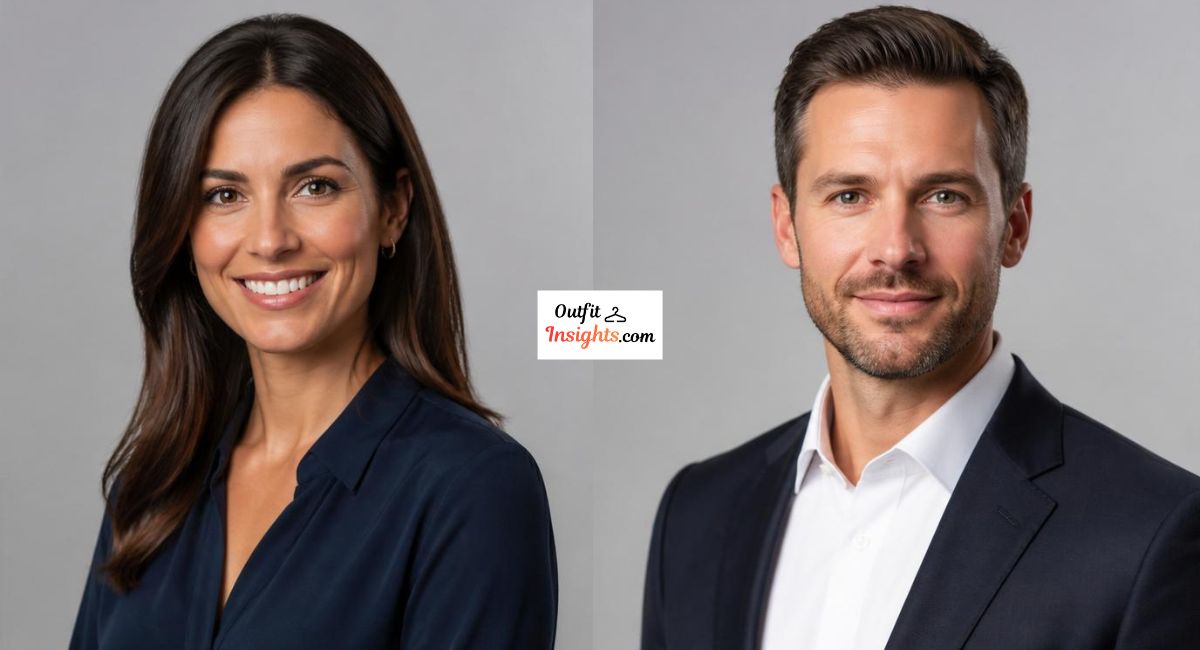
Knowing what to wear for a professional headshot is more important than most people realize before they actually sit down in front of the camera. A headshot is not just a photograph. It is your first impression in a professional context, the image attached to your LinkedIn profile, your company website bio, your speaker page, your press kit, and anywhere else the world forms an opinion of you before meeting you in person. What you wear in that single frame communicates competence, personality, and professionalism in a fraction of a second.
The challenge is that most people approach headshot outfit planning with the same logic they use for getting dressed in the morning, and that is where things go wrong. What looks good in a mirror or in a casual photograph does not always translate well under professional lighting conditions and in the compressed visual frame of a headshot. Understanding what to wear for headshots specifically — not just what looks good generally — is a skill with real rules behind it.
This guide covers everything you need to make the right choices for your session. Colors that photograph well under studio and natural light, fits that flatter on camera, what women and men should specifically consider, what to absolutely avoid, how to prepare the day before, and how clothing choices affect the overall impression your headshot creates. Whether your headshot is for corporate use, acting, real estate, LinkedIn, or any other professional context, the principles in this guide apply directly.
1. Understand What a Headshot Is Actually Communicating
Before choosing a single item of clothing for your professional headshot session, it helps to understand what the photograph is actually doing for you and who is going to be looking at it.
A professional headshot communicates four things simultaneously: your industry and professional context, your level of seriousness and competence, your approachability and personality, and the degree to which you fit the environment you are representing. Every clothing decision you make either strengthens or weakens one or more of these signals.
A corporate attorney’s headshot communicates something completely different from a creative director’s headshot, which communicates something different again from a real estate agent’s headshot. None of these is more correct than the others, but each requires a different approach to clothing, color, and styling. Before you open your wardrobe, ask yourself what impression you need this photograph to create and for whom it needs to create it.
This contextual awareness also applies to how formal or casual your headshot should feel. A LinkedIn profile photo for a startup founder can afford to be warmer, more relaxed, and more personality-driven than a corporate bio headshot for a law firm partner. Both are professional headshots. Neither outfit is universally right for the other context.
2. Choose the Right Colors for Your Professional Headshot
Color is the single most discussed and most misunderstood element of what to wear for a professional headshot. The right colors make your skin tone glow, your eyes appear vivid, and your overall presence feel confident and authoritative. The wrong colors wash you out, flatten your complexion, or distract from your face entirely.
Colors That Consistently Work Well
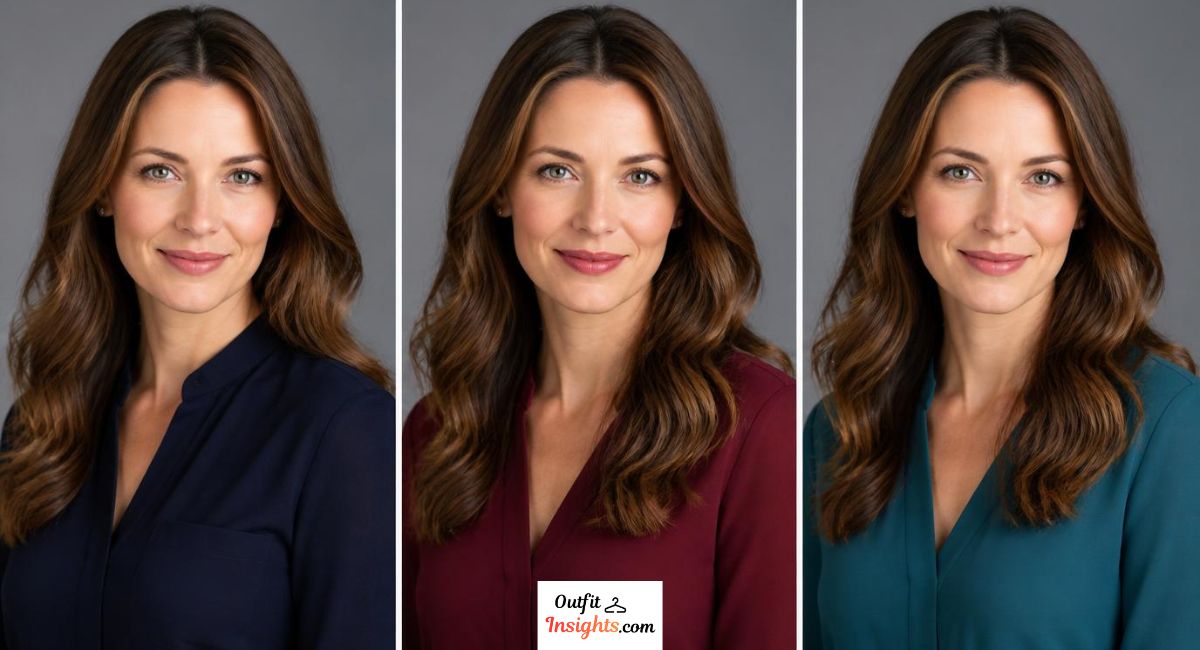
Deep, rich solid tones are the most reliable performers in professional headshot photography. Navy blue is universally considered one of the strongest headshot colors available. It reads as authoritative and trustworthy, flatters an extremely wide range of skin tones, and works beautifully against most studio backgrounds. Deep teal, rich burgundy, forest green, charcoal grey, and warm caramel brown are all similarly strong choices.
Jewel tones, including sapphire, emerald, and deep plum, add personality and vibrancy without introducing the distraction problems associated with overly bright or saturated colors. They tend to make the face appear more luminous by reflecting warm, flattering color toward the skin.
Mid-tone blues and greys occupy a safe middle ground that works well for almost any professional context. They are neither so bold that they dominate the frame nor so neutral that they fade entirely. For someone who is unsure where to start, a mid-tone blue or soft charcoal is a reliable and consistently flattering foundation.
Colors to Approach Carefully
Pure white is a complicated choice for professional headshots specifically. In studio lighting, bright white can overexpose and lose all fabric detail, creating a flat, featureless expanse that draws the eye without rewarding it. Off-white, ivory, and cream are far safer alternatives that still read as clean and fresh but hold their texture and dimension under studio lights.
Neon and heavily saturated colors — electric yellow, hot pink, bright orange — are difficult for camera sensors to accurately capture and tend to cast colored light onto the skin, affecting the apparent warmth and accuracy of your skin tone in the final image. Muted, desaturated versions of these colors are almost always preferable.
Color and Skin Tone Considerations
| Skin Tone | Most Flattering Colors | Colors to Approach Carefully |
|---|---|---|
| Fair / Light | Navy, deep teal, rich burgundy, soft dusty rose | Pastels that match skin tone, stark white |
| Medium / Olive | Forest green, warm rust, deep blue, caramel | Colors too close to skin tone, very pale tones |
| Deep / Dark | Jewel tones, rich emerald, bright white, cobalt | Very dark tones that reduce contrast |
| Cool undertones | Blues, purples, cool greys, true red | Warm oranges, yellow-greens |
| Warm undertones | Earthy tones, warm greens, burgundy, warm red | Cool stark white, icy pastels |
Choosing understated colors isn’t only important for professional photographs—it also applies to formal events where respectful attire matters. If you’re attending a memorial service or visitation, our guide on what to wear to a wake explains appropriate clothing choices and common etiquette guidelines.
For a broader understanding of how specific colors behave under different photographic conditions, our guide on What Color Is Most Flattering for Photos? (Professional Photographers Reveal the #1 Hue) covers the photography science behind color behavior in practical detail.
3. Nail the Fit Before You Think About Anything Else
The single most important clothing factor in professional headshot photography is not color, not style, and not price. It is fit. A well-fitted garment in a simple, neutral color will consistently produce a more polished, professional headshot than an expensive, stylish piece that does not fit correctly.
The camera compresses everything into a two-dimensional frame and makes fit issues extremely apparent. Pulling across the shoulders, bunching at the waist, collar gaps, fabric that sags or billows — all of these are visible and distracting in a professional photograph in ways that they simply are not in person.
For a headshot specifically, which is typically framed from the chest up or the shoulders up, fit in the shoulder and chest area is paramount. The shoulder seam of any jacket, blazer, or fitted top should sit at the natural edge of your shoulder — not hanging over it and not pulled in short of it. The collar, if present, should lie flat against the neck without gaps or bunching.
If you are purchasing something new specifically for a headshot session, even minor tailoring investment in the shoulder and collar area can meaningfully change how the garment reads on camera. Do not wait until the day of your session to discover that your best blazer pulls across the back.
4. What to Wear for a Professional Headshot as a Woman
What to wear for a professional headshot female is a question with more variables than the equivalent question for men, primarily because women have a wider range of clothing options, necklines, sleeve lengths, and styling choices available to them. This variety is a genuine advantage, but it also means there are more ways for things to go wrong.
Tops, Blouses, and Jackets
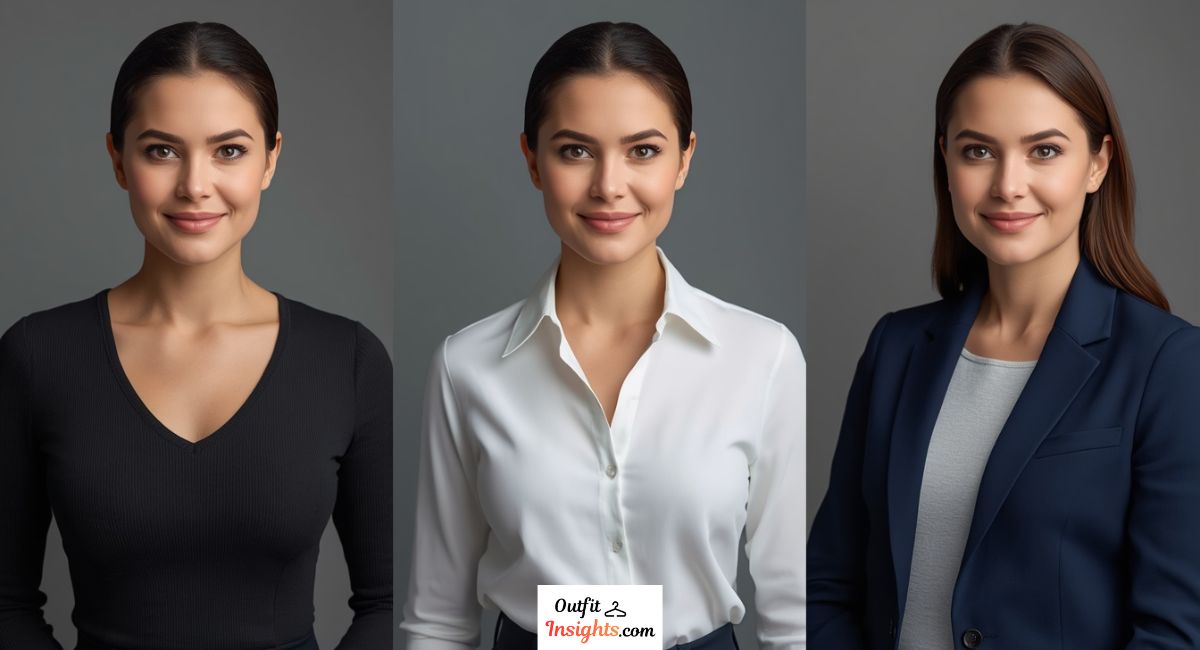
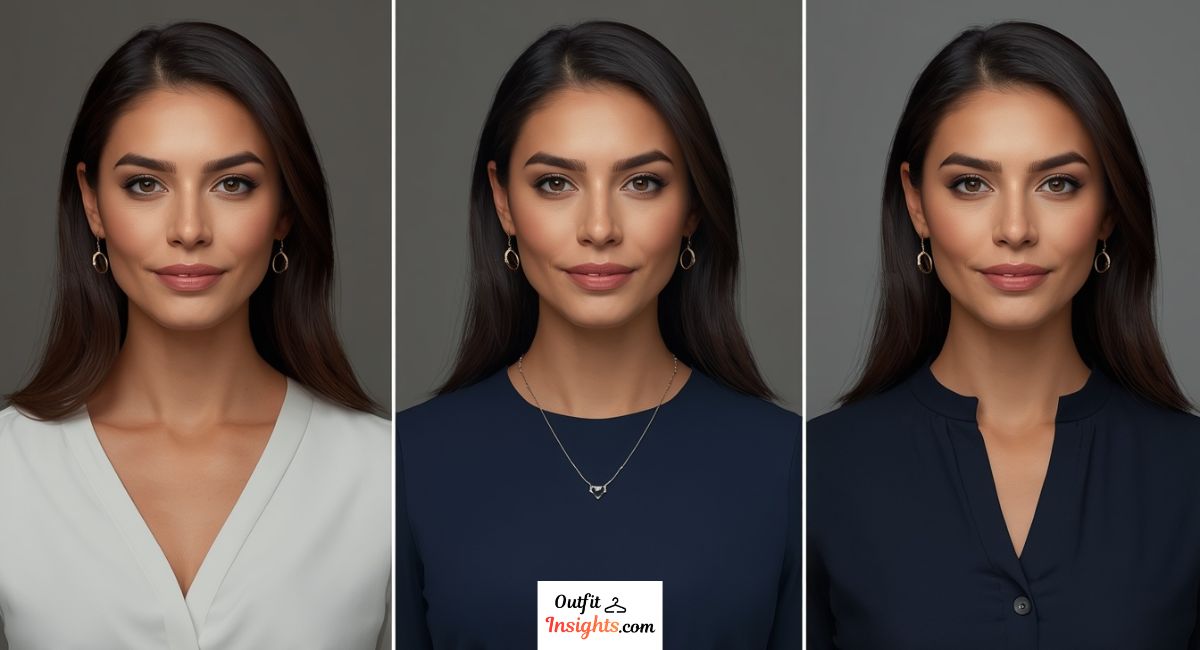
Tops with defined necklines photograph particularly well in headshots. A V-neck, scoop neck, or tailored crew neck creates clean lines that draw the eye upward toward the face rather than across the chest. Draped necklines and cowl necks can work beautifully when they lie flat, but they require attention because they can shift during a session and create asymmetric or bunched lines in individual frames.
Blazers and structured jackets are among the strongest choices for women’s professional headshots. They instantly communicate formality and authority, create clean shoulder lines, and work across virtually every professional context from conservative corporate environments to creative industries. A well-fitted blazer over a simple top in a complementary color is a formula that reliably produces strong headshot results.
Sleeveless tops and dresses can work for headshot sessions, particularly in creative or lifestyle-oriented industries, but they require more attention to hair and accessories to maintain a polished, complete appearance. In very formal corporate contexts, a sleeve provides a more traditional and conservative impression.
Necklines and Accessories
Accessories in professional headshots should complement without competing. A simple pendant necklace, small earrings, or a watch in frame are all appropriate and can add personality and polish. Statement jewelry that is very large, very bright, or very complex tends to pull the viewer’s eye away from your face, which is the opposite of what a headshot needs.
Avoid heavily patterned scarves or accessories with large, bold graphics. Simple, clean, and understated accessories consistently serve headshots better than elaborate ones.
Hair and Makeup Considerations
While strictly outside the scope of clothing, hair and makeup interact so directly with outfit choices in a professional headshot that they warrant brief mention. Colors in your clothing are reflected in your overall look and interact with hair color, eye color, and makeup tones. Choosing an outfit that complements rather than clashes with your natural coloring creates a cohesive, polished image.
5. What to Wear for a Professional Headshot as a Man
Men’s professional headshot outfit planning tends to be perceived as simpler, and in some respects it is. The range of options is narrower, the rules are more established, and the margin for error is smaller in both directions. But simpler does not mean thoughtless, and the men who consistently get the strongest headshots are the ones who think carefully about their specific choices.
Suits, Blazers, and Dress Shirts
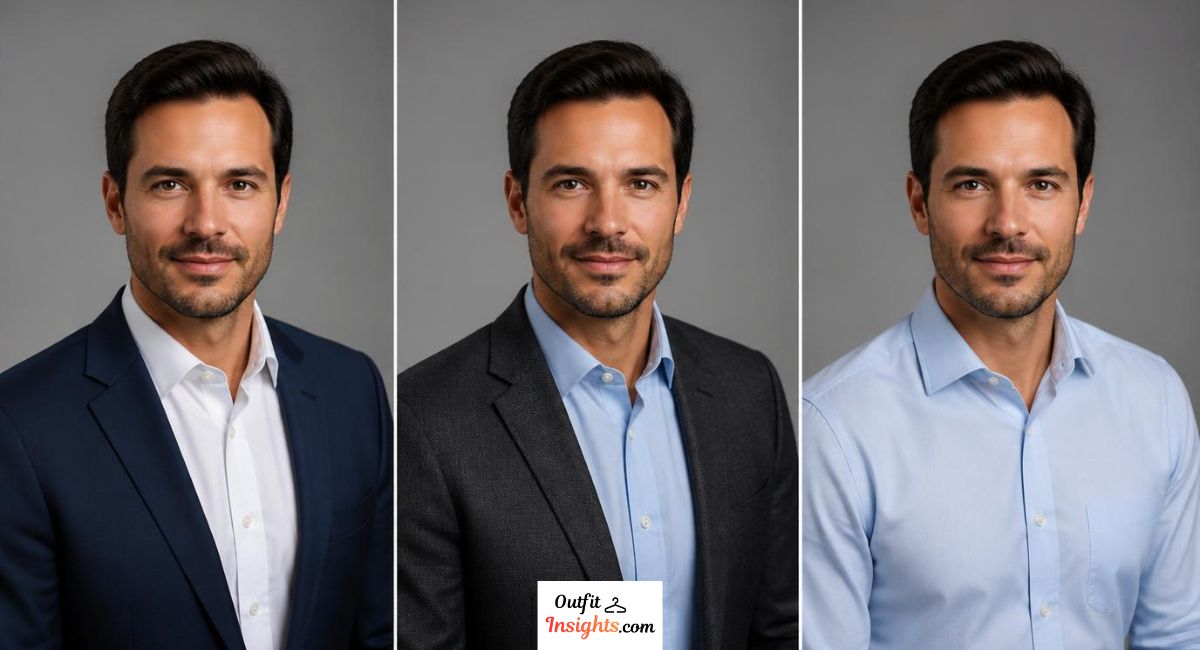
A well-fitted suit is the gold standard for formal corporate headshots. Navy, charcoal, and mid-grey are the most reliable suit colors for professional photography. They provide visual structure, communicate authority, and hold detail beautifully under studio lighting. The suit does not need to be expensive, but it does need to fit correctly across the shoulders and chest.
A blazer without a tie over a dress shirt is an increasingly common and widely accepted choice for professional headshots that need to feel authoritative but not rigidly formal. This combination works particularly well for LinkedIn profiles, creative industry headshots, and any context where approachability is as important as authority.
A well-fitted dress shirt without a jacket is the appropriate choice for industries where a suit would feel overdressed — technology, creative fields, startups, and casual corporate environments. In these contexts, a crisp, well-pressed shirt in a solid, rich tone creates exactly the right balance of professional and approachable.
Tie vs No Tie
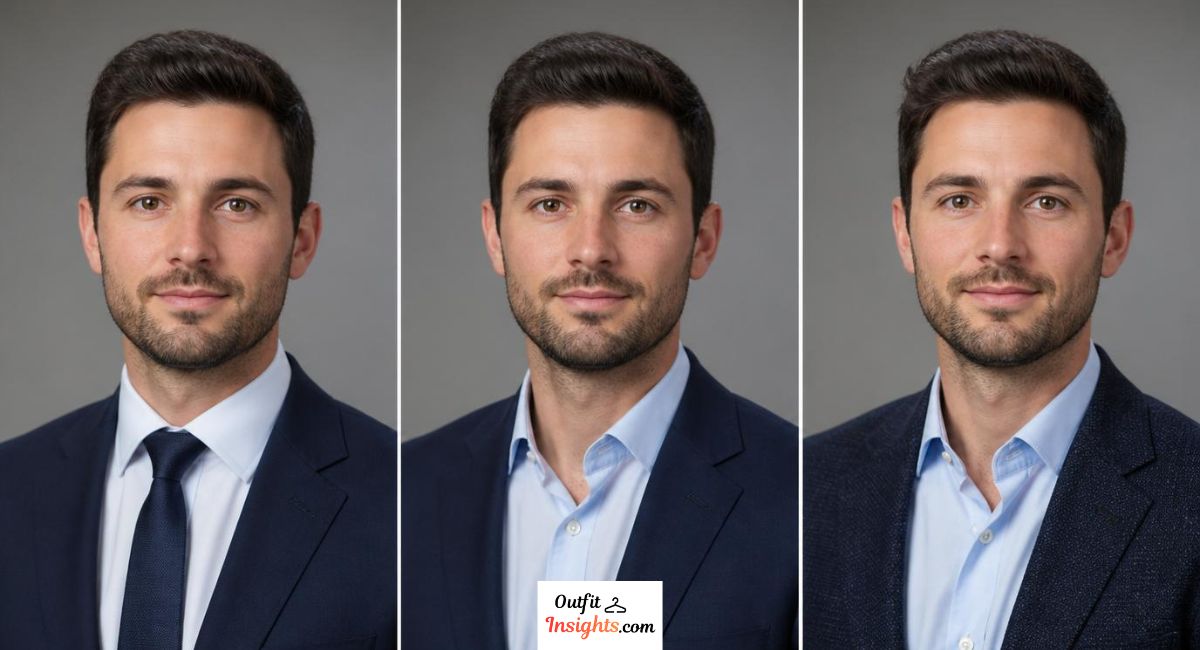
The tie question comes down entirely to context and industry. If everyone in your industry wears ties in formal situations, include one. If no one in your target professional context wears ties regularly, a tie in your headshot can make you look out of place or overly stiff. When in doubt, have the photographer take some frames with and some without — this gives you options in post.
Tie patterns follow the same rules as clothing patterns: subtle and understated beats bold and busy. A solid tie or one with a very subtle woven texture photographs far more cleanly than a bold stripe or complex pattern.
Grooming Considerations for Men
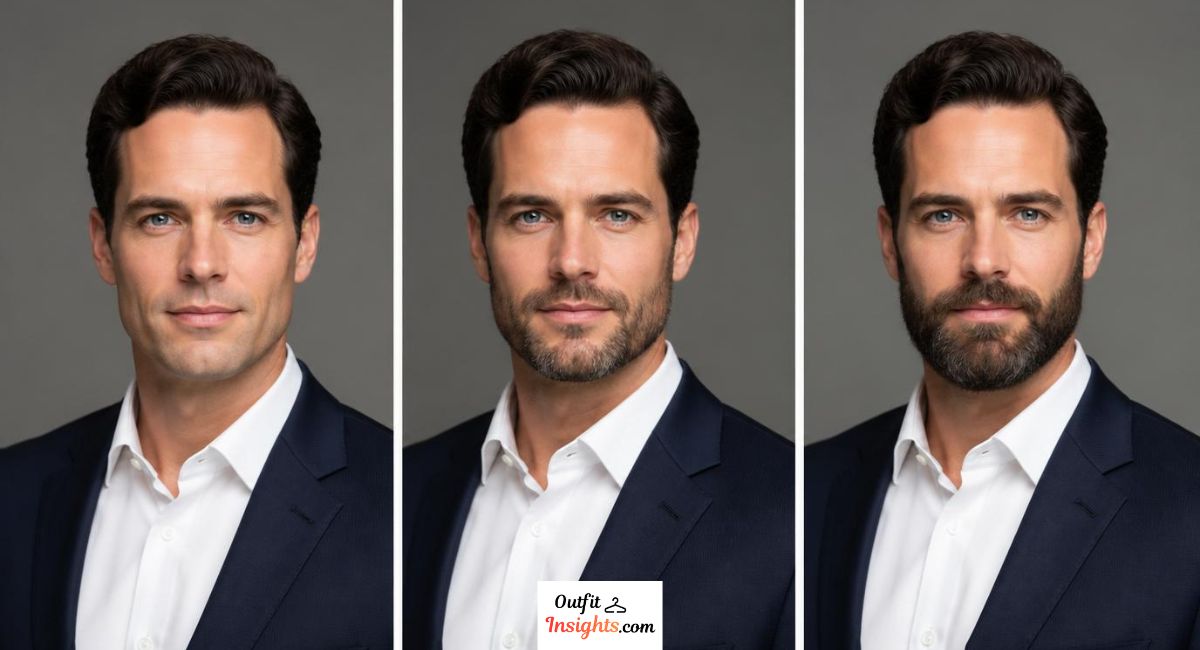
Fresh grooming makes a meaningful difference in men’s professional headshots. Hair that is neatly styled, facial hair that is either cleanly shaved or neatly groomed, and well-pressed, wrinkle-free clothing all communicate attentiveness to detail that shows clearly in a professional photograph. These preparations matter and are worth doing the day before rather than the morning of the session.
6. Fabrics That Photograph Well in Headshots
Beyond color and fit, fabric choice affects how clothing reads in professional headshots in specific and predictable ways.
Fabrics That Work
Solid, medium-weight fabrics — cotton broadcloth, wool suiting, ponte knit, and fine jersey — all photograph cleanly and hold their structure under studio lighting. They drape naturally, hold color accurately, and do not create distracting surface behavior in the final image.
Textured fabrics like fine tweed, herringbone, and cable knit add visual interest and depth to headshots without introducing the distraction problems of patterned fabrics. The texture is visible enough to add dimension but subtle enough not to compete with your face.
Fabrics to Avoid
Shiny, reflective fabrics — satin, silk charmeuse, and heavily lustrous synthetics — create unpredictable hotspots and glare under studio lighting. The reflection shifts with every subtle movement, creating inconsistency across frames and making exposure correction more difficult.
Very lightweight, sheer fabrics can reveal undergarments or create unexpected transparency issues under studio lighting that are not apparent in natural light. If you are wearing a lighter, finer fabric, check its opacity under direct light before your session.
Heavily wrinkled or easily creased fabrics introduce distraction quickly during a session. Bring your clothing freshly pressed and hang it immediately upon arrival at the studio.
7. Patterns: What Works and What Does Not
Patterns in professional headshots require careful consideration because they interact with camera sensors in ways that solid colors do not.
Fine stripes, houndstooth, and tight geometric patterns can produce a moiré effect — a distracting optical illusion of shimmering or rippling movement in the fabric that has nothing to do with how the garment actually looks. This effect is unpredictable and can appear even on patterns that look subtle to the naked eye.
Large, bold patterns — oversized florals, prominent plaid, graphic prints — draw attention to the clothing itself rather than to the face, which works directly against the purpose of a professional headshot.
The safest approach is to avoid patterns entirely in professional headshots and work with solid colors and subtle textures instead. If a mild pattern matters to you for personal or industry-specific reasons, a very subtle, widely-spaced pattern in tones close to each other in value is the most reliable way to include one without introducing distraction.
8. How Many Outfits Should You Bring to a Headshot Session
Bringing multiple outfits to a professional headshot session is one of the most practical and underutilized strategies available to you. Most photographers are fully comfortable with one to three outfit changes during a standard session, and having options gives you meaningfully more useful images from the same investment.
A standard professional headshot session benefits from two outfit approaches: one formal and one slightly more relaxed. The formal option might be a suit or blazer combination appropriate for your most conservative professional context. The relaxed option might be a well-fitted dress shirt or a smart top in a different color. Together, they give you images that serve different purposes across different professional platforms and uses.
| Outfit Type | Best Used For | Example |
|---|---|---|
| Formal / Corporate | Legal, finance, C-suite, LinkedIn | Dark suit, tie, pressed shirt |
| Business Casual | Tech, creative, education | Blazer, no tie, open collar |
| Smart Casual | Startups, creative fields, personal brand | Well-fitted top, textured layer |
| Industry Specific | Real estate, medical, performance | Appropriate uniform or context attire |
If you are booking a session primarily for LinkedIn and general professional use, two outfits that represent different sides of your professional personality are usually sufficient. If you need images for a wider range of purposes — corporate bio, speaker profile, press kit, personal website — three outfits with intentional variety give you the flexibility to serve each context appropriately.
9. What to Wear for Professional Headshots in Different Contexts
Understanding what to wear for professional headshots requires acknowledging that different industries and professional contexts have genuinely different standards and expectations.
Corporate and Finance
The most conservative professional contexts — law, banking, finance, corporate executive roles — call for the most formal headshot clothing. Suits in navy, charcoal, or dark grey for men and equivalent formal attire for women. Clean, pressed, and intentionally conservative. In these contexts, the headshot needs to communicate authority, trust, and seriousness above all other qualities.

Creative Industries
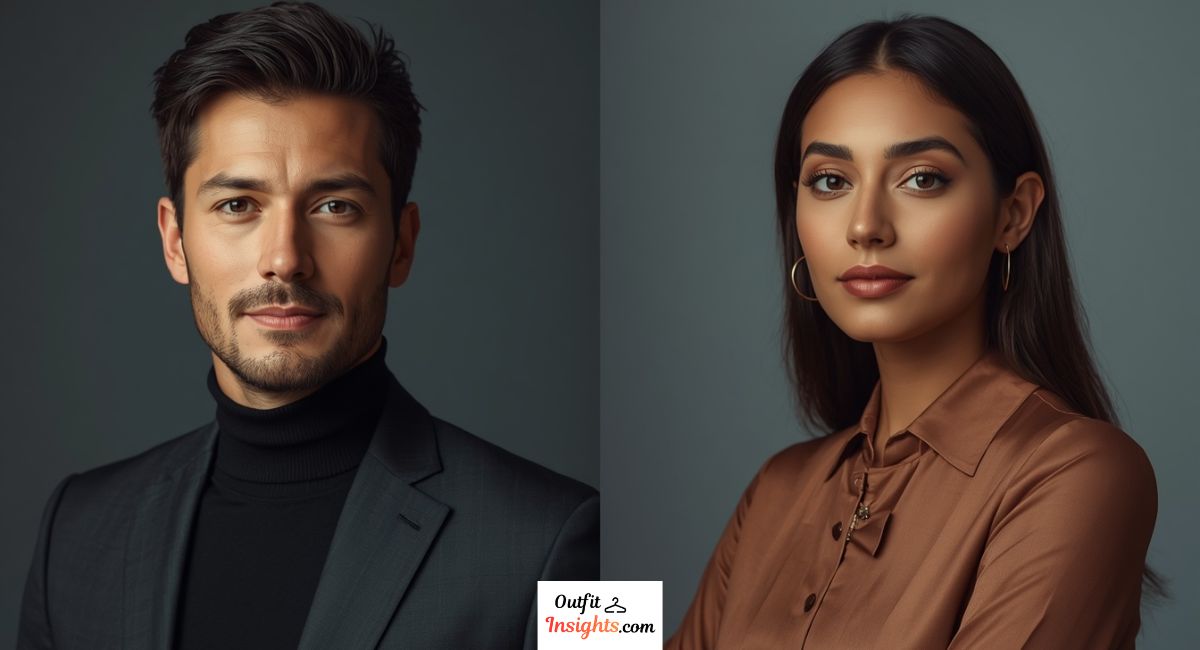
Advertising, design, media, entertainment, and similar fields allow for — and often reward — more personality in a professional headshot. Color choices can be bolder, styling can be more current and personal, and the overall impression can lean further toward approachable and creative without sacrificing professionalism. A creative director in a dark, well-fitted turtleneck communicates something genuinely different from the same person in a conservative suit, and in a creative context, that distinction is positive.
Real Estate and Sales
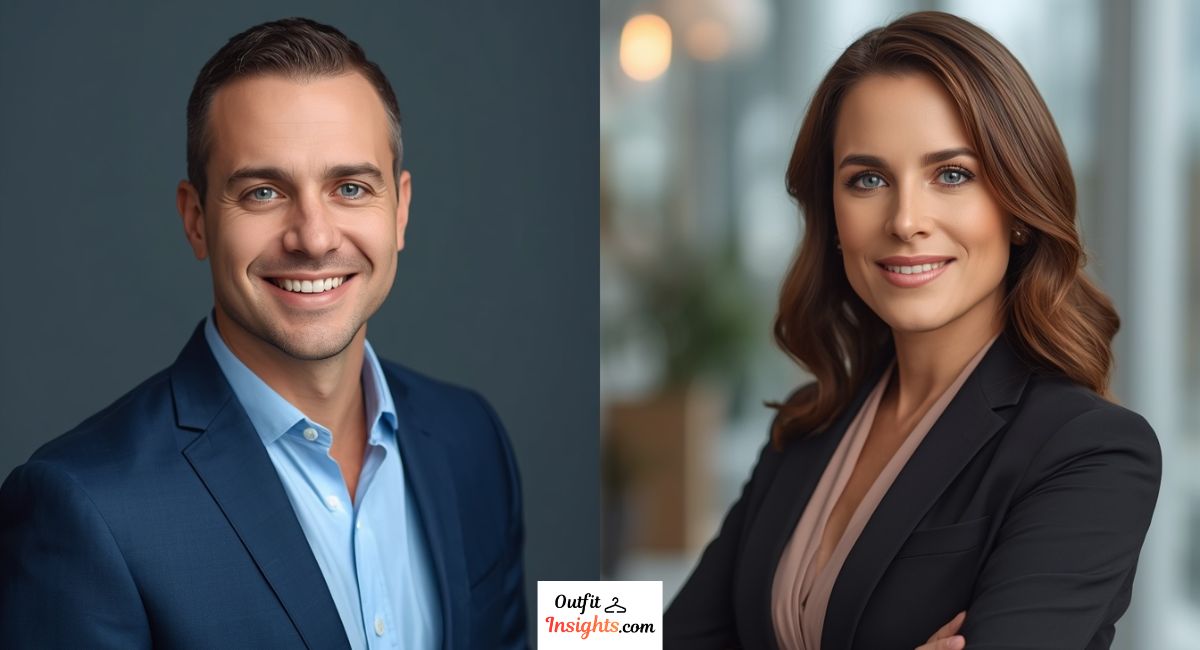
Real estate headshots need to balance approachability with competence. Warm, mid-tone colors and smart business casual attire tend to work better in this context than either very formal corporate wear or very casual clothing. The goal is to look like someone a homeowner would trust, feel comfortable with, and want to work with over several months.
Healthcare and Medical
Healthcare professionals often include their white coat in headshots as an immediate visual communicator of their professional role. Beneath the coat, a well-fitted collared shirt or blouse in a neutral or muted tone is appropriate. The coat itself communicates the professional context; the clothing beneath it should not compete or distract.

Actors and Performers
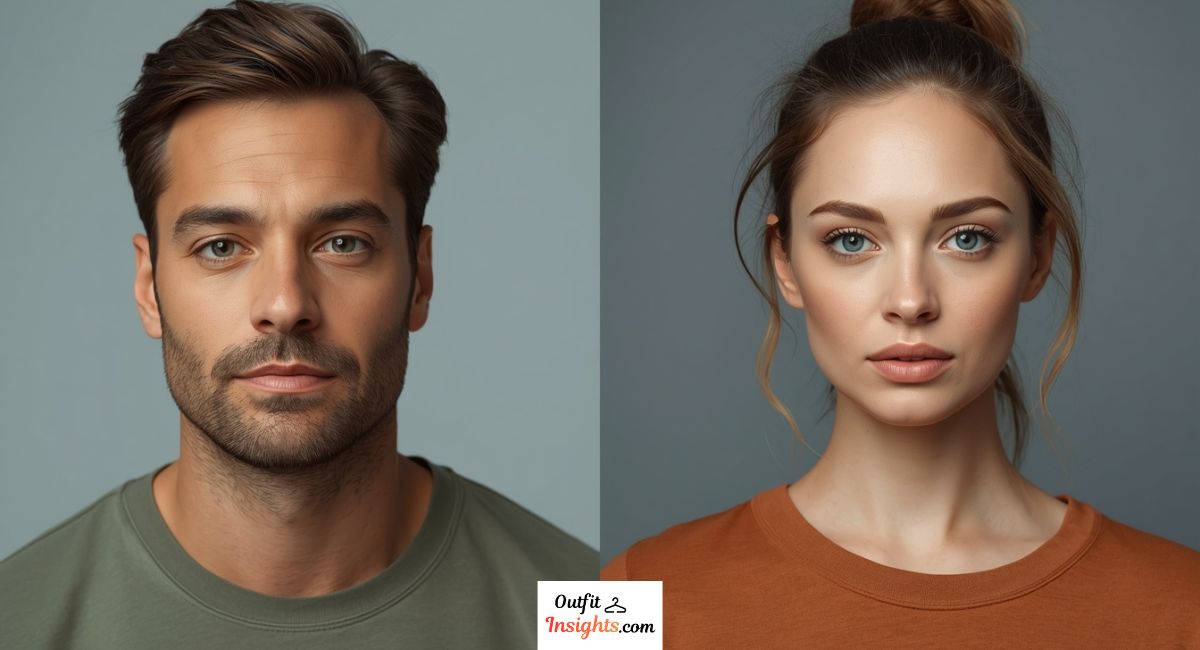
Acting headshots follow entirely different rules from corporate professional headshots. The goal is to communicate range, type, and personality rather than authority and competence. Simple clothing that does not distract from the face is paramount. Solid colors in tones that complement the actor’s coloring, minimal accessories, and clothing that helps communicate the type being played are the primary considerations.
10. Prepare Your Outfit the Night Before
One of the most practical and genuinely important things you can do for a successful professional headshot session is to prepare everything the night before rather than the morning of.
Steam or press every garment you plan to bring. Wrinkles are highly visible in close-up professional photography and communicate carelessness in a photograph that is supposed to communicate the opposite. If you do not own a clothes steamer, hanging garments in a warm, steamy bathroom for 20 minutes before packing them will release most creases adequately.
Try on your complete outfit, including any layers and accessories, for at least 15 minutes before the session. Sit down in it, stand up straight, turn your head, raise your arms. You need to know in advance whether anything pulls, bunches, rides up, or restricts your natural range of movement. Discovering these problems for the first time in front of a photographer wastes session time and adds stress.
Bring a lint roller. This is especially important if you have pets or if you are transporting dark clothing. Pet hair and lint are extremely visible in close-up professional photography and can require retouching time that would otherwise be spent on additional frames.
Hang your clothing for transport rather than folding and placing it in a bag. A garment bag is ideal. Wrinkles that develop during transport are not always easy to address quickly on location.
11. Common Mistakes People Make in Professional Headshot Outfits
Even people who generally dress well professionally make specific and consistent mistakes when it comes to headshot outfit choices. Being aware of these in advance helps you avoid them.
Wearing something brand new without testing it first is among the most common mistakes. New clothing may fit differently when sitting versus standing, may have unanticipated fabric behavior under direct lighting, or may not be as comfortable as it appeared in the store. Always wear new items at home for at least an hour before a session.
Choosing an outfit based entirely on what you think looks professional rather than what photographs well are two different things. A very pale grey suit might look elegant in person and in most lighting conditions, but under studio lights it can wash out entirely and reduce your visual presence in the frame. Test your outfit choices under direct light whenever possible.
Neglecting collar and neckline behavior is a specifically photographic mistake. Collars that gap, blouse necklines that shift, and any detail near the face that changes position between frames creates inconsistency and complicates the selection process. Make sure everything that appears near your face in the headshot frame is secure, stable, and behaving as intended.
Understanding the full range of what does and does not work in photography is covered in depth in our guide on How to Look Good in Professional Photos: 12 Proven Tips, which addresses both clothing and non-clothing factors that affect professional photo quality.
12. How Your Headshot Outfit Affects Your Personal Brand
The final and perhaps most meaningful consideration in what to wear for a professional headshot is what your outfit communicates about your personal brand specifically, not just your professional context generally.
Personal branding in a professional headshot is the intersection of industry expectations and individual personality. The most effective professional headshots do not look like everyone else in the same industry wearing the same safe choices. They communicate both competence within a professional context and something genuine and distinctive about the person.
This does not mean being unconventional for its own sake. It means choosing colors, fits, and styling approaches that genuinely reflect who you are within the bounds of professional appropriateness for your context. If you always wear a particular color that makes you feel confident and authoritative, that is worth considering for your headshot even if it is slightly more personal than the most conservative choice available.
The headshot that is going to represent you most effectively over the longest period of time is the one that looks like you at your most competent and confident — not the one that looks like the most generic version of a person in your role. Finding that balance is the real goal of everything in this guide.
For additional guidance on how to present yourself at your absolute best in front of a camera including expression, posture, angle, and the interaction between these elements and your clothing choices, our guide on How to Pose for Pictures Naturally (2026): Stop Looking Awkward in Photos covers the full range of techniques that complement strong outfit choices and produce genuinely compelling professional portraits.
FAQs: What to Wear for a Professional Headshot
Headshot outfit questions come up consistently regardless of professional background or experience level. The following answers address the most common concerns directly.
What colors work best for a professional headshot?
Navy blue, deep teal, charcoal grey, rich burgundy, and forest green are among the most reliably flattering and professionally appropriate colors for headshots. Jewel tones add personality while remaining polished. Avoid neon, heavily saturated brights, and pure white under studio lighting as they create exposure and skin tone challenges.
Should you wear patterns in a professional headshot?
Solid colors are strongly recommended over patterns for professional headshots. Fine stripes, houndstooth, and tight geometric patterns can create a moiré effect — an optical distortion in the fabric — that is distracting in the final image. If you want to incorporate texture, choose subtle woven textures in tones close to each other in value rather than distinct contrast patterns.
What should women wear for a professional headshot?
Women should consider structured jackets or blazers, tops with defined necklines, and solid colors in rich mid-tones or jewel tones that complement their skin tone. Avoid very shiny fabrics, overly large accessories, and anything with complex patterns near the neckline or face. Two outfit options covering different levels of formality give the most useful range of results from a single session.
What should men wear for a professional headshot?
Men should consider a well-fitted suit in navy, charcoal, or dark grey for formal contexts, or a blazer over a dress shirt for business casual settings. The fit across the shoulder and chest is the most important factor. Bring a tie option even if you are unsure whether to include one, and ensure all clothing is freshly pressed before the session.
How many outfits should you bring to a headshot session?
Two to three outfits is the standard recommendation. One formal option and one business casual option give you images that serve different professional contexts. Three outfits allow for additional variety if you have multiple distinct professional uses for your headshots. Discuss options with your photographer at booking to ensure your session length accommodates the changes you have planned.
Can you wear black for a professional headshot?
Yes, black is a completely viable and widely used choice for professional headshots, particularly in creative industries, media, and entertainment. Black works well when the clothing has visible texture — such as fine knit, structured suiting, or detailed fabric — and when the background is not also very dark, which would reduce the distinction between subject and background. A skilled photographer will adjust background and lighting accordingly.
How should you prepare your outfit before a headshot session?
Steam or press everything the night before. Wear the complete outfit including layers and accessories for at least 15 minutes to check fit and comfort. Bring a lint roller. Transport clothing on hangers in a garment bag rather than folded. Arrive early enough to address any last-minute wrinkles or adjustments before the session begins.
Does background color affect what you should wear?
Yes, your photographer’s background choices interact directly with your clothing. If you know in advance whether the background is white, grey, dark, or colored, you can choose clothing that creates appropriate contrast and visual separation. Ask your photographer about background options when discussing your session, and factor that information into your outfit planning.
A professional headshot is one of the most return-on-investment-positive professional investments you can make, and your outfit is one of the most controllable variables in its quality. According to LinkedIn Talent Solutions, profiles with professional headshots receive significantly more profile views and connection requests than those without, underscoring how directly this single photograph affects professional opportunity. The time you spend on outfit preparation for your headshot session pays returns every time someone encounters your professional profile.