

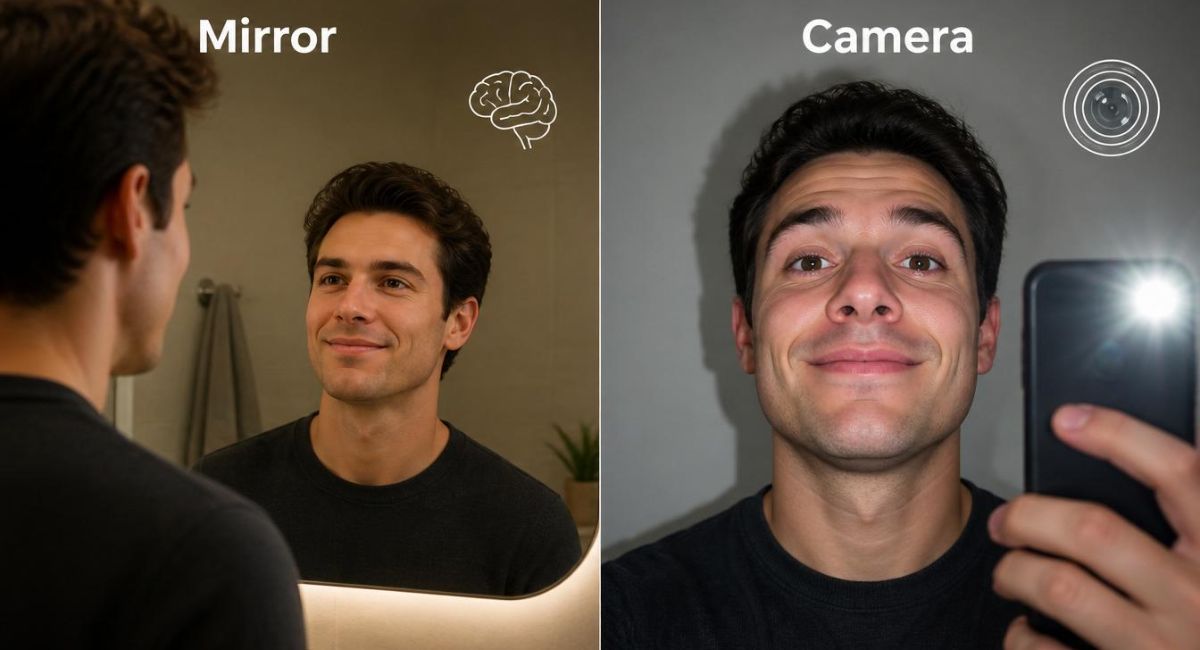
You look amazing in the mirror. Then the camera flashes and something strange happens. Your face looks different. Wider. Less symmetrical. Almost unrecognizable. You are not imagining this difference. The gap between mirror you and photo you has a scientific explanation rooted in lenses, lighting, and brain chemistry.
The camera does not capture what your eyes see. A smartphone lens creates subtle facial distortions that the mirror never shows. Your brain also processes mirror reflections differently than photographs. According to research from the University of California, people consistently rate mirror reflections of themselves as more attractive than photographs. The question why am I not photogenic but I look good haunts millions of people. The answer lies in four specific scientific phenomena. For practical solutions to these scientific challenges, Explore:
Many people assume a bad photo means they are simply not photogenic, but psychology tells a different story. If you’ve ever wondered why pictures of yourself often look worse than you expected, our guide on why you hate photos of yourself explains the science behind mirror familiarity, camera distortion, and self-perception biases that affect how we judge our own images.
1. Lens Distortion Changes Your Face Shape
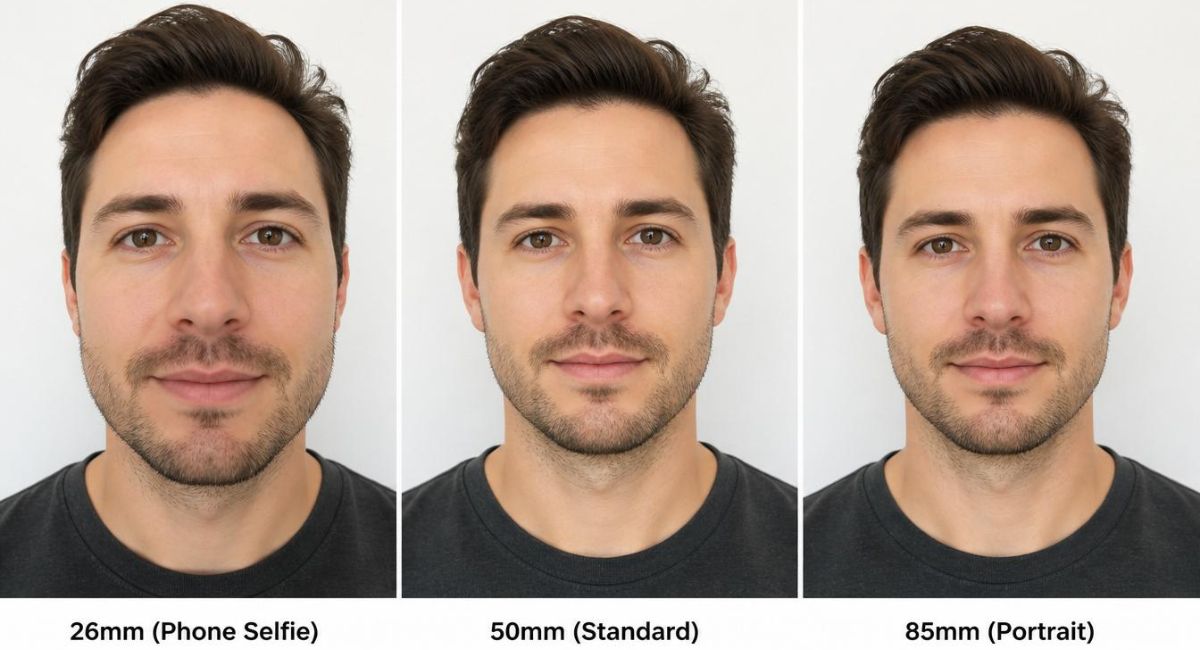
Different lenses create different faces. A smartphone uses a wide-angle lens approximately 26mm equivalent. This lens stretches features near the edges of the frame and exaggerates anything close to the camera. Your nose appears larger. Your cheeks look wider. Your face seems rounder than it actually is.
Portrait photographers use 85mm to 135mm lenses for a reason. These longer lenses compress facial features and create a more accurate representation. The difference between a 26mm phone lens and an 85mm professional lens can change perceived face shape by up to 30%. Your mirror shows you the 85mm version. Your phone shows you the 26mm version. No wonder you look different.
Distance from the camera matters just as much as the lens. Selfies taken at arm’s length (12-18 inches) maximize wide-angle distortion. The same phone held three feet away produces a more flattering result.
For a complete understanding of camera equipment and its effects, read:
Lens Focal Length and Face Distortion
| Focal Length | Typical Use | Facial Effect |
|---|---|---|
| 24-28mm | Smartphone selfies | Nose enlargement, cheek widening |
| 35-50mm | Casual snapshots | Slight distortion, generally flattering |
| 85mm | Professional portraits | Accurate representation |
| 135mm | Headshots | Most flattering compression |
2. Mirrors Show Your Familiar Reversed Face
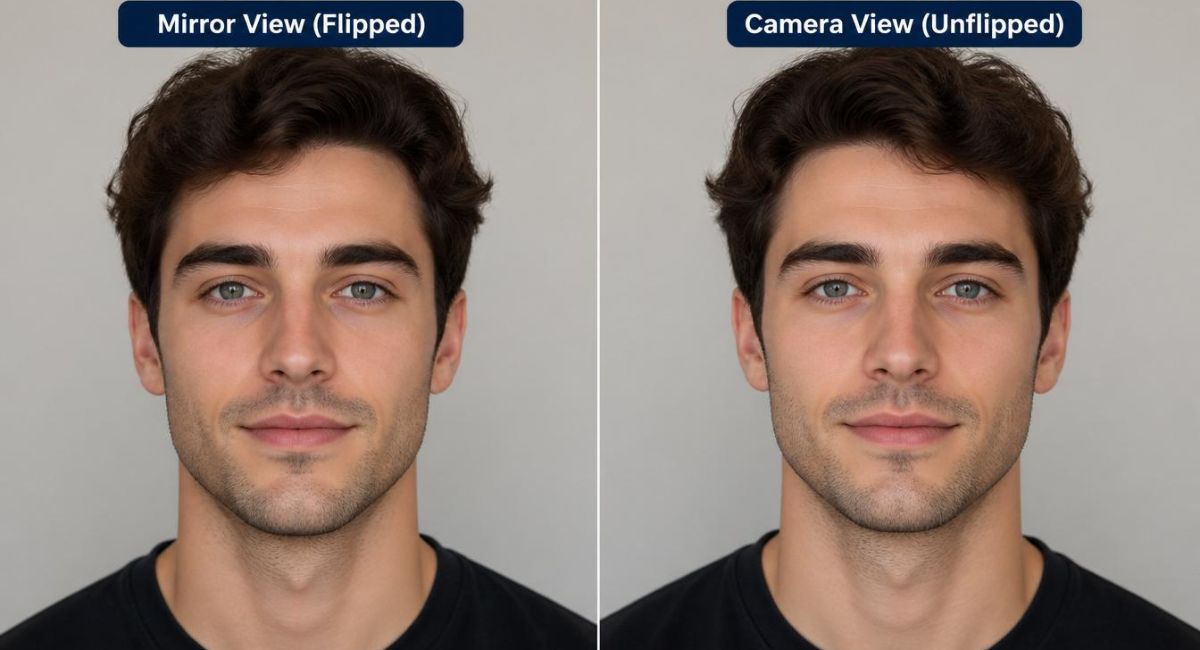
You see your mirror reflection every day. Multiple times per day. Sometimes dozens of times. That reflection is horizontally flipped compared to what everyone else sees. Your brain has learned to love the flipped version because familiarity breeds attraction.
Photographs show your face as others see it. Not flipped. Not reversed. This unflipped version looks subtly wrong to your brain because you rarely see it. Small asymmetries that you never notice in the mirror become suddenly visible in photos. A slightly higher eyebrow on one side. A nostril that flares more. A smile that tilts to the left.
The mere-exposure effect explains this phenomenon. Psychologists have known for decades that people prefer faces they see more often. Your mirror face is your most familiar face. Your photo face is your least familiar face. The question why am I not photogenic but I look good answers itself when you understand mere-exposure. You look good in the mirror because you are used to it. The photo looks wrong because it is unfamiliar, not because it is ugly.
Discover how facial familiarity affects your confidence in:
3. Lighting Changes Everything About Your Face
Mirrors benefit from soft, ambient, multi-directional light. Your bathroom mirror likely has overhead lights plus natural window light plus reflected light from white walls. This combination softens shadows and minimizes imperfections.
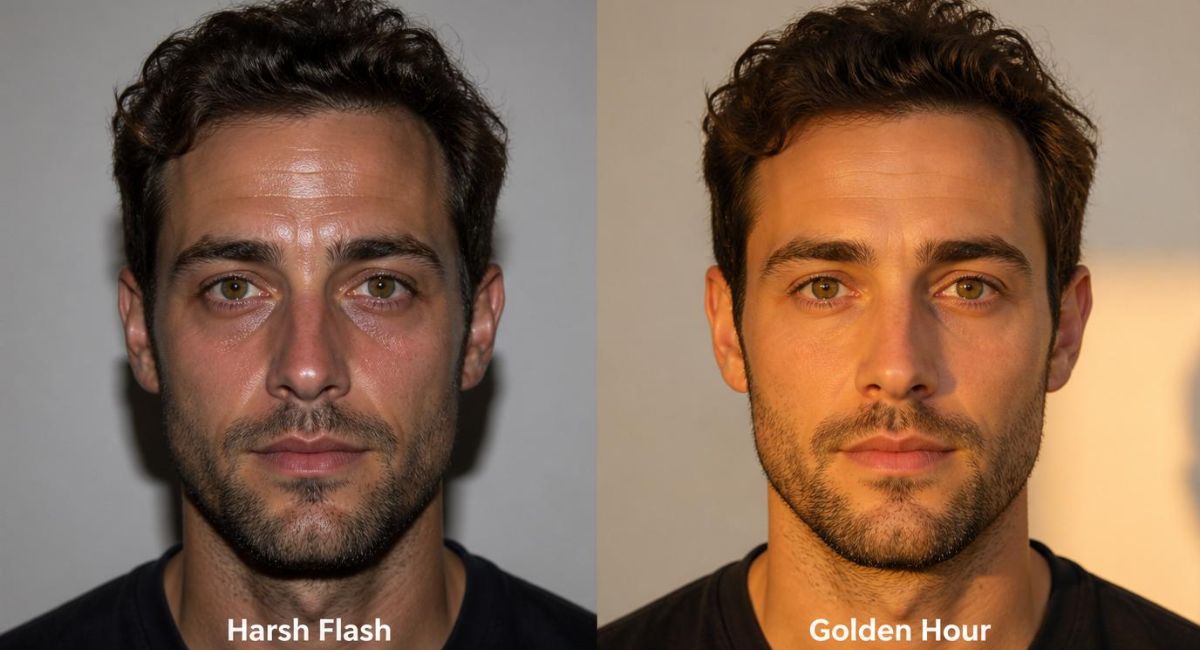
Camera flash creates harsh single-direction light. This unflattering light emphasizes every bump, wrinkle, and pore. Shadows fall in unnatural directions. The hollows under your eyes appear deeper. Nasolabial folds look more pronounced.
Golden hour light flatters everyone equally. Professional photographers wait for this specific light because it wraps around the face and creates soft shadows. The difference between harsh flash and golden hour light can make the same person look ten years older or younger.
Indoor lighting ruins many otherwise good photos. Overhead ceiling lights create raccoon eyes. Fluorescent lights add sickly green tints. Mixed temperature lights confuse the camera’s white balance. Your mirror never suffers from any of these problems.
Learn to master flattering light in:
4. Candid Moments Capture Real Expressions
Posed photos look posed. That is the problem. When someone points a camera at you, your entire body tenses. Your smile becomes forced. Your eyes widen unnaturally. Your shoulders creep up toward your ears.
Candid photos capture authentic expressions. The moments between poses. The laugh after a joke. The relaxed face when you forget the camera exists. These genuine expressions always look better than forced smiles because they are real.
You cannot force photogenic. The most photogenic people are not necessarily the most attractive. They are the people who relax into the camera’s presence. They stop trying to look good and start being themselves. This relaxation shows up in every photo.
Practice makes natural. The more photos you take, the more comfortable you become. Professional models did not look like professionals on day one. They practiced. They learned their angles. They stopped tensing up. You can learn the same skills with consistent practice.
For practical posing exercises that build camera confidence, read:
5. You Are Your Own Worst Critic
Nobody studies your photos as closely as you do. You zoom in on your chin. You stare at your smile lines. You compare every photo to an idealized version of yourself that does not exist.
Other people see the whole image. They look at your eyes first. Then your smile. Then the overall composition. They never zoom in on your insecurities because they do not share those insecurities.
The spotlight effect makes you overestimate how much others notice. Research shows that people consistently believe others pay more attention to their appearance than they actually do. Your friends look at your smile, not your nose.
Social media makes this worse. Filtered, edited, posed photos from influencers set impossible standards. Your candid family photo cannot compete with a professionally lit, edited, and posed studio image. It was never supposed to.
The question why am I not photogenic but I look good often comes down to unrealistic expectations. You look good. You always have. You just hold yourself to a different standard than you hold anyone else. Explore color choices that boost your confidence in:
- What Is the Most Photogenic Color? Photographers Reveal the #1 Hue
- What Color Is Most Flattering for Photos? (Professional Photographers Reveal the #1 Hue)
6. Practical Solutions to Look Better in Photos
| Problem | Solution |
|---|---|
| Lens distortion | Hold phone further away, use 2x zoom |
| Unfamiliar flipped face | Take more photos, get used to your real face |
| Harsh lighting | Seek golden hour or open shade |
| Forced expressions | Practice candid movement between poses |
| Self-criticism | Ask a trusted friend for their honest opinion |
Hold your phone higher and further away. Eye level or slightly above. Three feet minimum distance. Use 2x zoom if your phone has it. This reduces wide-angle distortion significantly.
Take photos daily for two weeks. Post one per day. Force yourself to see your unflipped face until it becomes familiar. The discomfort will fade. Your confidence will grow.
Find open shade for outdoor photos. Under a tree. Beside a building. Anywhere the sky is blocked but light still bounces from all directions. This soft light flatters everyone.
Move between poses. Walk. Turn. Look away then look back. Have someone tell a joke. The moments between poses often produce the best images.
Stop comparing to edited photos. Social media is a highlight reel of heavily processed images. Your real face was never supposed to compete with that.
For seasonal photo tips that work with natural light, explore:
- Spring Family Photo Outfits 2026: Fresh Stylish Ideas for Blooming Portraits
- Summer Family Photo Outfits: Light & Airy Styles That Photograph Beautifully (2026)
- Fall Family Photos: Stylish Outfit Ideas That Look Stunning & Elegant
- Winter Family Photo Outfits: Cozy Elegant Looks That Keep You Warm and Photogenic
7. The Bottom Line
You look different in photos than in the mirror for four scientific reasons. Lens distortion changes your face shape. Mirrors show your familiar reversed face. Lighting affects every shadow and highlight. Candid expressions look more authentic than forced smiles. Plus you are your own worst critic. The solution is not better looks but better understanding. Hold your phone further away. Take more photos until your face becomes familiar. Seek flattering light. Relax between poses. Stop comparing yourself to edited images. You are more photogenic than you think.